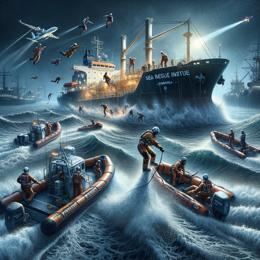
Image created by AI
Lifesaving on the Shores: Calls for AEDs on Cape Town's Beaches Intensify
The serene beauty of Cape Town's beaches stands in stark contrast to the potential perils posed by their popular waters. In light of recent devastating incidents that claimed lives on these shores, the local community and experts alike are ringing the alarm on the necessity for public access to Automated External Defibrillators (AED) and easy-to-use airway devices.
On Mnandi, Strandfontein, Clifton, and other busy beaches, a common morning scene transitions to individuals of diverse backgrounds embracing the cold embrace of the Atlantic Ocean. Yet, this picturesque environment was recently marred by tragedy when a swimmer succumbed to cardiac arrest despite the valiant CPR efforts of those around him. Mere months later, another soul was lost to drowning, despite near-heroic resuscitation efforts. These incidents have rocked the Cape Town coastal community, uniting them in a time of grief and a shared resolve to prevent future losses.
Recognizing that every second counts in a cardiac arrest situation, the immediate commencement of chest compressions is critical. These must be performed with vigor and precision to ensure the continued circulation of blood to vital organs. Even with these efforts, however, without the aid of a defibrillator to correct potential heart rhythm disturbances, the chances of revival drop precipitously with each passing minute.
AEDs could serve as a vital bridge during the gap between the onset of an emergency and the arrival of paramedics. These devices offer voice-guided support for untrained passersby, stepping them through the rescue process and potentially delivering life-saving shocks to the victim. The global survival rate from cardiac arrests hovers at a modest 7-8%, but with the prompt application of AEDs, these odds can significantly increase.
However, the path to equipping beaches with these essential devices is fraught with concerns about security and maintenance in South Africa. Previous instances of stolen life-saving equipment color the debate, yet lessons have been learned. Implementing secure but accessible storage solutions—like those developed by the National Sea Rescue Institute (NSRI) for shark attack kits—could protect devices from theft while keeping them within reach for emergencies.
Moreover, the deployment of affordable items such as pocket masks and face shields could further arm the public with the means to conduct safe rescue breaths, particularly crucial in drowning cases. Such tools are a small investment with potentially invaluable returns. Increased availability of these devices, coupled with community education and first aid training, can build a robust infrastructure of prevention and response, transforming public spaces into safer havens for recreation and relaxation.
On the affluent sands of Clifton and Camps Bay, the integration of such life-saving technologies may be more readily attainable compared to other well-loved but less prosperous beaches like Mnandi, Alpha, and Nine Miles. Nonetheless, the geographic disparity does not diminish the universal imperative; access to AEDs should not be a luxury but a standard across all public arenas.
Tragedy has a pervasive reach but so does the capacity for community resilience. Take the wisdom of Dr. Kantor, an experienced anaesthesiologist, who underscores the far-reaching impact of a successful resuscitation—not only in the breath restored to the fallen but in the indelible mark left on those who partake in the miracle of saving a life. The message is clear: Capetonians, join in the effort to make your beaches bastions of safety, equipped to deal with the unexpected and prepared to preserve the lives of locals and visitors alike.
Leave a Comment
Recent News