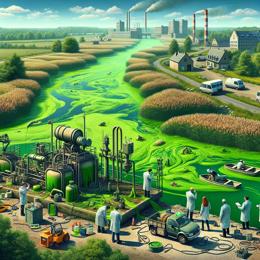
Image created by AI
The Lethal Haze Over the Vaal Triangle: South Africa's Air Quality Crisis
South Africa's Vaal Triangle, a mere 30 miles south of Johannesburg, has become the epitome of an environmental paradox. A drive into this densely industrialized heartland reveals skies blanketed with toxic emissions from heavy industries - a lethal cocktail to its 1.7 million residents. The sturdy plants of steel, power and petrochemicals which line the Vaal Triangle landscape are both lifelines and death sentences to the community – they offer much-needed employment in a region plagued with unemployment while simultaneously emitting perilous pollutants.
The region, an industrial powerhouse that has shaped South Africa's status as the most industrialized African nation, is now host to a catastrophic pollution crisis. Historical industrialization has darkened into a legacy of contamination, with cities like Vereeniging notching up some of the highest levels of PM2.5 particulate pollution worldwide according to Bloomberg Green's analysis of OpenAQ data. These particulates, often invisible, can penetrate deep into the lungs, causing severe health problems, including cancers and cardiac issues.
For decades, the South African government has been aware of the escalating problem, declaring the Vaal Triangle as the Airshed Priority Area, with the goal of lowering pollution levels. Unfortunately, little progress has been observed. Industrial giants such as Eskom and Sasol argue against the costs and feasibility of installing pollution reduction equipment, citing astronomical unemployment rates and the economic repercussions to justify their stance.
However, the government's tolerance may be waning. A new environmental ministry administration has signaled expectations for compliance with imminent stricter pollution laws by 2025. Yet, implementation faces challenges as the affected residents continue to suffer debilitating health conditions. Reports by experts detail a grim situation where power plants significantly contribute to premature deaths annually.
Portia Mofokeng's story is just one among many - asthma-stricken due to proximity to the Lethabo plant, unable to secure work due to her health condition, predictably caused by the surrounding pollution. Similarly, residents of Zamdela endure the direct consequences of nearby industrial activity, fearing the very air they breathe.
Despite the grim cloud over the Vaal Triangle, the industry has reported steps taken to reduce emissions, with ArcelorMittal and Sasol claiming significant reductions in particulate emissions through modern technology and waste management programs. However, these initiatives appear to be a drop in the ocean, particularly when juxtaposed with the overall rising emissions from all of Eskom's plants.
Amidst the toxicity, there is a faint glimmer of hope. The nation is subject to mounting international pressure to reform, and South Africa is currently partaker in a multi-billion dollar transition to greener energy, potentially leading to the closure and conversion of coal-fired plants like Lethabo. Sasol has initiated a green hydrogen facility in Sasolburg, which, if successful, could be a stepping stone in the fight against the dual threats of pollution and climate change.
The fight for improved air quality in the Vaal Triangle represents a microcosm of the global tussle between industrial progress and environmental sustainability. As the world turns its attention to the dangers of pollution and the critical need for a greener future, the Vaal Triangle remains a stark reminder that for some, the cost of pollution is measured in breaths and lives, rather than economic metrics.
Leave a Comment
Recent News