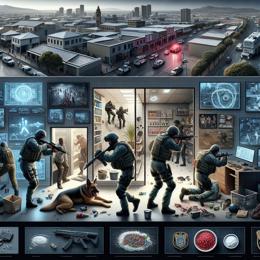
Image created by AI
MBDA Launches High-Tech Drones and CCTV Expansion to Combat Crime Across Nelson Mandela Bay
In a significant step forward for public safety in the Eastern Cape, the Mandela Bay Development Agency has rolled out seven advanced surveillance drones as the centrepiece of its Phase Three Security Infrastructure Project. The initiative, launched on Thursday, expands the metro’s integrated security network and will give the South African Police Service access to more than 700 CCTV cameras once everything is fully operational.
The project creates a single surveillance platform that links drones, cameras and monitoring technology directly with law enforcement and emergency services. It adds 360 high-performance CCTV cameras to the existing network, installs 40 kilometres of fibre optic cable and deploys drones capable of tracking suspects, detecting heat signatures and feeding live intelligence to responders. Officials expect the completed system to strengthen crime prevention, cut emergency response times and deliver real-time situational awareness across Nelson Mandela Bay.
Five specially trained pilots based in Gqeberha operate the drones, backed by a national pool of 20 additional operators who can step in when required. The aircraft sit in secure, undisclosed locations spaced roughly five kilometres apart so their coverage overlaps. This arrangement reduces the risk of vandalism and keeps the units ready for immediate launch.
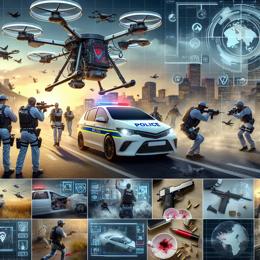
Security specialist Johan Barnard of Afrisec Group explained that the drones handle both proactive patrols and reactive call-outs. “They are used for active and reactive surveillance,” he said. During routine flights they scan public spaces for robbery, hijacking, kidnapping, cable theft and vandalism. When an incident is reported, the nearest drone lifts off at once and streams live aerial footage to SAPS, Metro Police and private security teams. Responders therefore arrive with a clear picture of the scene rather than walking into the unknown.
Barnard noted the immediate impact: “Literally from day one you catch illegal activity, whether it’s cable theft, poaching, car theft or illegal dumping. Wherever something is occurring illegally, the drones sniff them out very easily.” Each unit carries high-definition optical and thermal cameras, allowing effective operation in daylight or total darkness. Onboard artificial intelligence software flags suspicious movement, identifies weapons and spots unusual behaviour patterns.
The live feed also improves officer safety. “Everything the drone sees is relayed immediately to SAPS, Metro Police and the security guards on site. They don’t go blindly into a specific scenario where they can get ambushed or hurt. Before they move in, they know how many people are there, where they’re hiding and, in some instances, whether they have firearms,” Barnard said.
The drones work hand-in-glove with the city’s Automatic Number Plate Recognition camera network. When police seek a suspect vehicle, its registration is entered into the system. ANPR cameras locate the car and cue the nearest drone, which then follows it until the vehicle enters the next drone’s zone, where another aircraft takes over the track. Infrared capability lets operators obtain close-up footage even in low light, giving investigators visual evidence that was previously hard to secure.
All flights are licensed and will receive South African Civil Aviation Authority clearance when they enter controlled airspace. Beyond crime work, the drones support disaster management. Live aerial views assist search-and-rescue teams, wildfire responders, flood monitors and post-disaster damage assessors, improving planning and keeping personnel safer.
The camera expansion is equally ambitious. The 360 new units bring the metro’s total to almost 700. They include ANPR cameras that flag stolen or wanted vehicles in real time, vari-focal bullet cameras, wide-dynamic-range dome cameras suited to busy public spaces, pan-tilt-zoom cameras with strong optical and infrared reach, and thermal imagers that detect movement through darkness, fog or smoke. Forty kilometres of fresh fibre optic cable bind the entire network to the central control room at Nelson Mandela Bay Stadium, creating a seamless data pipeline.
By combining aerial mobility with a dense ground-based camera grid and intelligent analytics, the Phase Three project equips Nelson Mandela Bay with a modern, layered security system. Law enforcement gains eyes that never sleep, emergency services receive better intelligence, and residents stand to benefit from faster, safer responses to both crime and disaster. The MBDA and its partners have made clear that the technology is already producing results and will only grow more effective as the final cameras and fibre links come online.
Leave a Comment
Recent News