Image created by AI
Trump’s Suspension of Anti-Corruption Law Threatens Global Governance and Democracy
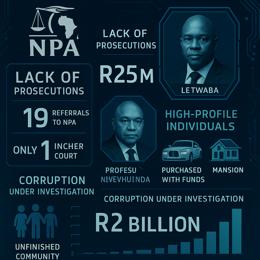
In a recent and controversial move, US President Donald Trump suspended enforcement of the Foreign Corrupt Practices Act (FCPA), signalling a dangerous shift in global economic policy and governance. This act, established in 1977, has been a pivotal tool in curbing corruption and maintaining ethical business practices across borders. It has notably uncovered and hampered State Capture scenarios worldwide, where private interests unduly influence public policy to serve their agendas rather than the common good. Countries like Brazil and South Africa have particularly benefited from this legislation, uncovering massive corruption schemes that plague governance and economic stability.
Trump’s decision undermines decades of progress in global anti-corruption efforts. The suspension invites multinational corporations and political elites to engage in practices that were previously sanctioned under the act. The potential ramifications of this policy shift are dire, sparking fears of an increase in corrupt activities that could lead to economic and political destabilization on an international scale.
Notably, Trump’s decision is not just a domestic policy shift but a global message — one that could weaken judicial systems, diminish law enforcement integrity, and shrink civic spaces vital for upholding democratic values and human rights. This move grants unwarranted freedom to U.S. corporations to exert influence and control in developing countries where governance systems are vulnerable. Investments, rather than being channels for growth and development, could turn into instruments of exploitation.
By scaling back the FCPA, other nations may feel pressured to lower their anti-corruption standards, leading to a domino effect that would erode global economic and political norms established to safeguard against the very essence of State Capture. Moreover, Trump’s approach gives competitive edges to countries like China and Russia, who often engage internationally with fewer ethical reservations, thereby shifting global power balances.
The broader implications for global markets could be significant. Companies engaged in corrupt practices risk losing credibility and thus face potential exclusion from key markets that continue to enforce strict anti-corruption laws. This could eventually isolate the U.S. economically and diplomatically, undermining its position in the global market and enabling other superpowers to fill the gap.
Furthermore, Trump's policies could increase economic inequality, fuel social unrest, and exacerbate political instability, particularly in countries already grappling with corruption. These conditions foster environments susceptible to conflict, which would have wide-reaching implications, including increased migration and regional destabilization.
Reacting swiftly and decisively to this policy change is crucial for maintaining global stability and equality. Governments and international bodies must reassess their strategies and potentially strengthen their legislations to counterbalance the negative impacts of the U.S. decision. As corruption threatens the fundamental structures of societies worldwide, reinforcing commitments to transparency and fairness is more important than ever.
Leave a Comment
Recent News