Image created by AI
Controversial U.S.-South Africa Relations Bill Clears First Congressional Vote Amidst Tense Foreign Policy Debates
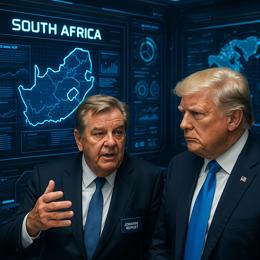
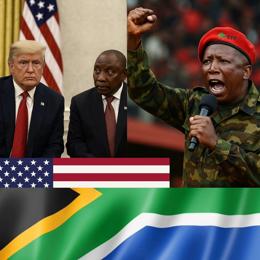
The United States Congress has taken a significant step with the "U.S.-South Africa Bilateral Relations Review Act" successfully passing its preliminary phase, signaling potential shifts in the diplomatic ties between the two nations. Introduced by a bipartisan pair, Republican John James and Democrat Jared Moscowitz, the bill mandates a comprehensive evaluation of the ANC government's foreign policy, which allegedly aligns with nations seen as adversarial to U.S. interests, like Russia, China, and groups such as Hamas, identified by the U.S. as a Foreign Terrorist Organization.
This act, poised for a formal roll call vote, emphasizes the necessity for transparency regarding South Africa's actions and their effects on U.S. national security and foreign policy interests. Additionally, it has cast a critical spotlight on International Relations Minister Naledi Pandor, whose calls for demonstrations against Israel-supportive entities, including the U.S., have not gone unnoticed.
In a noteworthy development, Republican Scott Perry's proposed amendment aimed at terminating all foreign aid to South Africa was soundly defeated. This decision, backed by voices like Anthony Carroll, highlights the importance of continued U.S. health assistance, particularly for HIV/AIDS efforts through the Pepfar program, and the potentially devastating impact of halting such aid.
The bill's passage is not without its detractors, as senior Democrat Gregory Meeks emphasized the value of U.S.-South African cooperation. He cited the country's role in ensuring President Putin's absence from a BRICS summit, showcasing Pretoria's periodic alignment with U.S. diplomacy. Other Democrats like Jonathan Jackson stress the need for a balanced approach that fosters partnership despite divergent views, recognizing South Africa's dedication to democracy and human rights.
Despite partisan support from Republican Michael McCaul, noting South Africa's military exercises with Russia and China, the bill stands at a critical juncture with the Senate yet to propose corresponding legislation. Amid ongoing scrutiny, Minister Pandor is addressing the fallout over South Africa's postures towards the conflicts in Ukraine and Gaza in her U.S. engagements, facing a significant misstep when challenged on her perception of authoritarian regimes.
This legislative activity marks a pivotal moment in U.S.-South African relations, with potential implications for foreign aid, military cooperation, and the strategic partnership within the African continent.
Leave a Comment
Recent News