Image created by AI
The High Cost of Blind Allegiance: The Downfall of Zuma's Sycophants
In the shadows of political titans, there often lies the wreckage of devout followers who pay dearly for their blind loyalty. South Africa is no stranger to this phenomenon, especially in the context of former president Jacob Zuma's era—a time marked by political upheaval and a relentless push toward kleptocracy. The narrative is replete with individuals who, entranced by the allure of power, suffered ruinous consequences.
Leading the charge into infamy is John Hlophe, the first Judge President in the democratically elected South Africa to face impeachment after gross misconduct findings by a Judicial Conduct Tribunal. His attempt to sway Constitutional Court justices in a corruption case related to Zuma when he was the judge president serves as a stark testament to the perils of partisan judicial intervention.
The South African political landscape has been bruised by the activities of Zuma loyalists. Their actions resonate with power struggles observed globally, where leaders subvert freedom and accountability for personal gain. South Africa's once heralded fight against apartheid has devolved into a battle against the very corruption it sought to eradicate. This decline mirrors an international drift towards "electoral autocracy," as observed in nations like the US, Russia, and Brazil.
Zuma's command has left a trail of devastation, affecting both henchmen and heroes. The gallant few who dared to become whistle-blowers paid with their lives or careers, while others found themselves in hiding. Movers of the private sector—global accounting, auditing, and consulting firms—were not spared, their gleaming reputations smeared as they, too, got entangled in the web of deceit spun by Zuma's regime while profiting from public funds meant for the impoverished.
Meanwhile, the African National Congress (ANC) grapples with the quandary of addressing the misconduct of influential party members who remain salaried despite being implicated in the State Capture scandal. The list of those implicated includes high-profile figures from various government sectors, with the ANC's Integrity Commission urging the removal of over 100 party members from its electoral rolls.
Also among the fallen is Busisiwe Mkhwebane, the Public Protector who was impeached for conduct that compromised the very integrity of the office she held. Her fall from grace arrived after a parliamentary inquiry exposed how she used her position to champion Zuma's political interests while accruing immense legal costs in the process, a daunting outcome for one who once shielded the former president's shadow state.
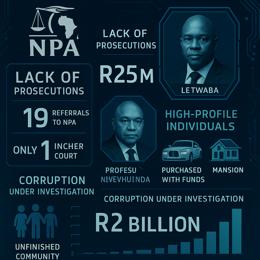
The effects of Zuma's influence, however, extend beyond political casualties. Key institutions have been hijacked in the service of graft—bodies ranging from the NPA, SARS, and SAPS to the judiciary and even Parliament itself have felt the sting of "Zumification," with their integrity and efficacy undermined.
Nationally-known figures like former SARS commissioner Tom Moyane and ex-SAPS national commissioner General Khehla Sitole became casualties after being shown complicit in Zuma's machinations. Dudu Myeni, once an influencer at South African Airways, received the title of delinquent director for actions during her tenure.
Zuma's embattled journey has not only affected his associates but also his personal life. With a bevy of ex-wives and lovers, the accumulation of legal costs and dwindling political fortune exhibit a life fraught with turmoil, showcasing the personal toll of his actions.
With these examples as a backdrop, South Africa teeters at the precipice of a defining moment. The heart of the nation's democratic structures quivers as it strives to right the course against an undercurrent of corruption, reminiscent of global trends. This year, a crucial one for democratic processes worldwide, offers an opportunity to shift away from the grip of the corrupt elite. In this historical pivot, South Africa finds itself contemplating which direction to embrace—a return to principles of common good or a deeper descent into the quagmire of malfeasance typified by the Zuma wreckage.
Leave a Comment
Recent News