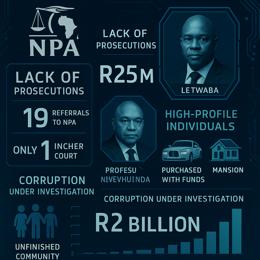
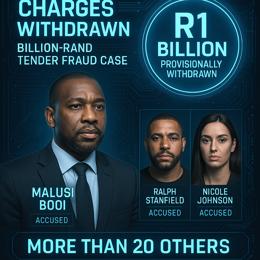
Image created by AI
South Africa's TV License Dilemma: Balancing Law Enforcement Priorities and Revenue Generation
In South Africa, the enforcement of TV license payments has become a contentious issue, presenting a conundrum of legal priorities versus the allocation of state resources. Under the Broadcasting Act No. 4 of 1999, South Africans are mandated to pay for a TV license, a regulation meant to financially support the South African Broadcasting Corporation (SABC), the nation's public broadcaster.
However, the widespread default on such payments has been emblematic of a deeper resistance to what is perceived as an unjust criminalization of a non-violent act. The penal consequences for failing to procure a TV license—a fine of up to R500 or a maximum of six months imprisonment—seem particularly harsh when juxtaposed with the fact that non-compliance does not result in the infringement of any individual's rights.
In contrast, requiring licenses to operate potentially dangerous machinery, such as vehicles, is rationalized by the training and competence they represent, and the consequent reduction in risk of harm to individuals. This is not the case with TV licenses; holding or not holding one has no correlation to the upholding of rights or prevention of harm.
The logic that a failure to pay for a TV license could result in criminal charges raises concerns about the ethics and efficiency of the legal system. It seems illogical, if not wasteful, to equate the non-payment of a TV license with genuinely harm-inducing crimes, when resources could be more judiciously allocated towards curbing South Africa's notorious violent crime rates.
Recent SAPS crime statistics are alarming, with over 86 murders reported daily and a paltry 8% conviction rate for such crimes. It is a common-sense expectation that the focus of law enforcement should pivot to address these pressing concerns, rather than expending energy and resources on non-violent statutory offenses like unpaid TV licenses.
A pervasive culture of non-payment has taken root in response to the TV license law's perceived illegitimacy, and such civil disobedience only serves to undermine respect for the law more broadly. It is a dangerous precedent when citizens start dismissing laws as absurd, potentially leading to a breakdown in adherence to more fundamental laws aimed at protecting persons and property.
For the justice system to regain credibility, it would need to realign its priorities to target genuinely harmful activities. This is not to say that the SABC does not require funding, but that the approach to securing such funding needs to dovetail with public perceptions of justice and the efficient use of state resources.
It stands to question whether criminalizing the non-payment of TV licenses is a just and reasonable use of the South African criminal justice system. The resources that go towards prosecuting such crimes might be better used in combating the high rates of violent crimes that continue to plague the nation. Reforms could involve decriminalizing non-compliance and exploring alternative revenue-generating mechanisms for the SABC that do not overburden the judicial system.
This issue brings to the fore the broader discourse on the role of state regulation and punitive measures in governing society's various non-violent offenses. As South Africa grapples with ethical and economic quandaries within its legislative framework, calls for reform grow louder, advocating for a system that appropriately balances punitive measures while addressing the root causes of non-compliance with regulatory frameworks.
Leave a Comment
Recent News