Image created by AI
US Warns Iran of UN Action Over Nuclear Non-Cooperation
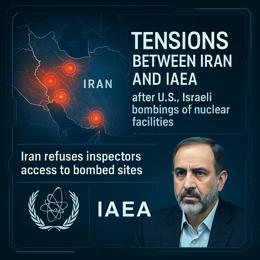
In a significant diplomatic stance, the United States has expressed its concern regarding Iran's ongoing resistance to cooperate with the International Atomic Energy Agency (IAEA). This issue was brought to the forefront during the IAEA's 35-nation board of governors' quarterly meeting in Vienna, Austria. The United States and its key European allies are stressing the importance of Iran's transparency concerning uranium traces found at undeclared sites within its territory.
The uranium in question, which remains unaccounted for in terms of origin and purpose, poses a threat to the integrity of international nuclear non-proliferation efforts. The US has indicated that continued avoidance by Iran could lead to decisive action within the framework of the United Nations. This stance by Washington comes in the wake of potential strains that such a resolution could cause, particularly with the US presidential election approaching. Iran has previously reacted sharply to resolutions, often by intensifying its nuclear activities, a pattern that the global community finds unsettling.
The US statement at the board meeting stressed the critical nature of this juncture, pointing out that the current lack of cooperation could warrant further board actions, including increased resolutions and reassessing Iran's compliance with safeguard obligations meant to prevent the development of nuclear weaponry. This firm position is indicative of the growing impatience among the US and its allies, including Britain, France, and Germany.
This development arises after Donald Trump's 2018 withdrawal of the US from the 2015 nuclear deal, which had initially curbed Iran's nuclear program in exchange for the lifting of sanctions. The re-imposition of sanctions by the US has led Iran to expand its nuclear activities beyond the limits set by the deal, spurring significant concern from the Western powers. High-level uranium enrichment by Iran, reaching up to 60% purity—significantly closer to weapon-grade levels—has no credible civilian justification according to the IAEA, raising alarm bells about Iran's intentions.
The United States now demands Iran to provide immediate access to the IAEA for environmental sample collection and a comprehensive report on its activities from IAEA chief Rafael Grossi, hinting at more wide-ranging oversight than before. Depending on the insights within this forthcoming report, the US is prepared to "take appropriate action in support of the IAEA and the global nuclear non-proliferation regime," emphasizing the gravity of the situation.
This firm stance from the US represents a critical moment in international relations regarding Iran's nuclear program. The global community, led by the US and its allies, expects Iran to take swift action to reassure the world of its peaceful intentions and adhere to its international obligations.
Leave a Comment
Recent News