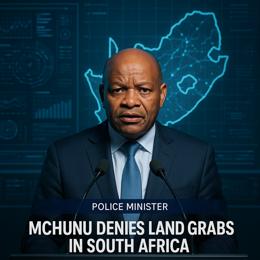
Image created by AI
United South Africa Movement Introduces People's Charter Ahead of 2024 Election
In a significant development ahead of the pivotal 2024 elections, The United South Africa Movement (TUSAM) has introduced the South African People’s Charter alongside the Charter of Citizens’ Obligations, representing a blueprint for reforming South Africa's political landscape. Through years of meticulous consultations, TUSAM, which operates as a non-partisan civic movement, has crafted these documents with the intent of overhauling current governance structures that they perceive as overly protective of the ruling African National Congress (ANC) and susceptible to exploitation by corrupt officials.
Solly Moeng, a leading figure of TUSAM, engaged in a revealing interview with BizNews, where he articulated the profound need for these changes. Moeng emphatically argued that the existing institutions, designed to safeguard the new democracy at its inception, have failed to insulate the country from corrupt practices. By repurposing the structures to shield nefarious political actions rather than serving the populace, these bodies have neglected their foundational duties. Thus, the establishment of the People's Charter and the Charter of Citizens' Obligations are envisioned to act as countermeasures—buffers to prevent unscrupulous politicians from subverting the system for personal gains.
The Charters are not only about institutional reform but also about civic responsibility and voter empowerment. Moeng underscored the necessity for South Africans to be well-informed and civically educated to exercise their franchise judiciously, not merely out of emotions or due to deceptive promises. The appeal to deeply understand the functioning of society's key institutions—something TUSAM hopes will be incorporated into educational curriculums—is part of a larger ambition to encourage citizens to participate actively in creating a culture of accountability and integrity.
With these launched Charters, TUSAM is presenting a clear message to political parties seeking electoral support: endorse and adhere to the commitments outlined within to earn the movement's backing. The endeavor to operationalize this by attaching pledge signatures to the Charter is a bold move, and although TUSAM anticipates a mixed reception, with some political entities verbally supportive but hesitant to officially sign, TUSAM remains optimistic about working with like-minded parties that demonstrate a genuine willingness to align with their vision.
The Charter of Citizens’ Obligations particularly highlights the role of the populace in curbing criminality and enhancing societal welfare. Moeng indicated that the prevalent culture of turning a blind eye to crimes within one's community—be it receiving or protecting stolen goods or failing to report malfeasance—nurtures the very degradation they seek to eliminate. This call for personal accountability further stresses individual contributions to societal development, extending beyond the specter of political influence.
TUSAM's introduction of the People's Charter and the Charter of Citizens’ Obligations signifies a significant moment for South African politics. As the nation approaches the elections of 2024, these instruments serve as a yardstick for political reform and a reminder of the power that an informed and engaged citizenry holds in driving the nation forward.
#GOOGLE_AD
Leave a Comment
Recent News