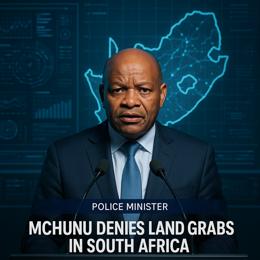
Image created by AI
ANC Cadre Deployment Documents Reveal Influence over SABC during 2019 Elections
Documents released by the Democratic Alliance (DA) have brought to light the extent of the African National Congress (ANC's) involvement with the South African Broadcasting Corporation (SABC) during the nation's 2019 elections. The contents of these meeting documents from the ANC cadre deployment committee lay bare how the SABC was positioned at the epicenter of the governing party’s electoral campaign strategy.
The ANC's approach has long been under scrutiny, criticized by many as a way to secure influence within key state entities, including the public broadcaster. The documents feature the details of a high-profile meeting at the ANC headquarters at Luthuli House in March 2019, chaired by the then-Deputy President David Mabuza. It points to a strategic maneuver two months prior to the national and provincial elections, highlighting the urgency to appoint a new board at the SABC before the voting on May 8.
Moreover, the committee underscored the need for the upcoming board to "carefully manage the news agenda" at SABC. This statement fuels the enduring accusations against the ANC for attempting to use the public broadcaster to disseminate content that would be favorable to the party and influence the electorate.
The revelation has sparked a fresh wave of debate around the media's independence from political powers in South Africa. The notion of a governing party wielding power over national broadcasting content brings into question the objectivity and impartiality of the information disseminated to the public via the SABC. The intensity of these concerns resonates with the importance of a fair and free press in any democratic society.
This exposure by the DA has led to public outcry and demands for accountability and a re-evaluation of the policies that allow for such political involvement in state-owned entities. Observers and civil society groups are calling for reforms to ensure the autonomy of the SABC, preventing its use as a political tool in future electoral campaigns.
The documents have become a point of contention, raising queries about the mechanisms in place for the maintenance of a non-partisan state broadcaster which should serve the interests of all South Africans equitably, devoid of political influence from any side of the ideological spectrum.
In the broader context, South Africa's complex political environment, with its history of state capture, corruption, and challenges to media freedom, means that these revelations arrive at a critical time. As questions are raised about the conduct of the ANC in respect to its relationship with the SABC, it also highlights a universal dilemma – how to balance political interests with the principle of independent public broadcasting that forms the cornerstone of democracy.
The ANC has yet to fully respond to the implications of the leaked documents, but the debate they have initiated continues to reverberate through the corridors of power and the public sphere. The ongoing response to these developments will prove to be a litmus test for the nation's commitment to a free, fair, and independent media landscape as envisaged in its democratic foundations.
Leave a Comment
Recent News