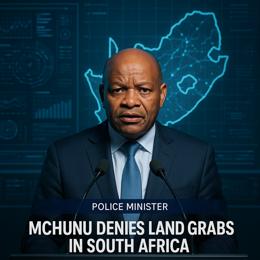
Image created by AI
Turmoil in KZN Politics: ANC-EFF Relationship Strained Over Council Dynamics
The political landscape in KwaZulu-Natal (KZN) is witnessing significant strain as the working relationship between the African National Congress (ANC) and the Economic Freedom Fighters (EFF) appears increasingly fraught with tension. The recent developments in the eThekwini Municipality have brought this simmering discord to the fore, with potential repercussions for governance in the province.
Political friction escalated when the EFF threw its support behind an Inkatha Freedom Party (IFP) motion to oust eThekwini Mayor Mxolisi Kaunda. This contentious political maneuver signals more than just a localized squabble; it reflects a broader shift in provincial coalition politics, where alliances were once made – and now are breaking. EFF provincial chairperson Mongezi Twala expressed that the party's broader relationship with the ANC in KZN is under review following the fallout from this episode.
This rift follows the EFF’s withdrawal from a coalition agreement with the IFP last year, which resulted in all EFF deputy mayors stepping down. This change facilitated the ANC's dominance in several district and local municipalities. Yet, when the EFF endorsed the IFP's bid to topple Kaunda, tensions crystallized. Notably, at the council meeting, Themba Mvubu, EFF caucus leader, discarded the need for secret ballot voting and affirmed the EFF's stance against the mayor – a move that led to Mvubu's dismissal from his role in the human settlements and infrastructure portfolio committee by the ANC.
In a harsh critique, Twala voiced his accusation that the ANC desired the EFF in eThekwini to acquiesce submissively on key policy matters. He condemned the ANC's tactics when facing opposition on governance issues, highlighting an uncompromising stance towards ensuring just service provision for the populace.
The current disagreement mirrors a previous altercation when EFF councilors clashed with eThekwini Municipality security guards amidst demands for city manager Musa Mbhele's departure from a meeting concerning unspent funds meant for infrastructure repair.
Responding to the turbulence, ANC provincial secretary Bheki Mtolo portrayed the EFF's actions as a ploy for media attention. He criticized the EFF for inadequately managing the critical responsibilities ascribed to them within the municipal framework.
Yet, despite these challenges, the intervention of EFF deputy president Floyd Shivambu once presented a temporary respite, hinting at the fragility but also the recoverability of inter-party relations.
The current scenario paints an uncertain picture for the future cooperation between the two parties. ANC provincial spokesperson Mafika Mndebele articulated a clear dissociation between the EFF and ANC within eThekwini, chastising the EFF's governance capabilities and blaming their ambitions for publicity as the motive behind their backing of the no-confidence motion.
With mutual recriminations and a lack of trust plaguing both parties, a stalemate ensues, raising questions about the efficacy of governance in KZN and the potential impact on service delivery in the region. The political implications stretch beyond eThekwini and reverberate throughout KZN, where the stability of municipal leadership hangs in balance, and the electorate watches with a weary eye.
Leave a Comment
Recent News