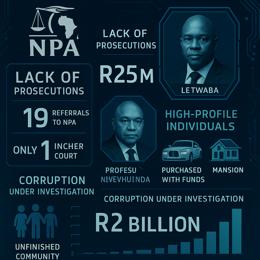
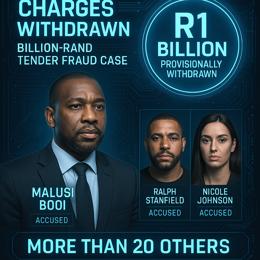
Image created by AI
South Africa's Parliament Braces for Historical Impeachment Vote Amidst Legal Controversy
South Africa's parliamentary halls are poised for decisive action as they prepare to vote on the impeachment of Western Cape Judge President John Hlophe. The embattled jurist finds himself at the center stage of a legal drama that has spanned nearly 16 years, with stakes that are as much personal as they are national.
This contention is not new to the South African judiciary or to Parliament itself. President Cyril Ramaphosa's suspension of Hlophe last year followed severe allegations of gross misconduct, similar to the case involving former Public Protector Busisiwe Mkhwebane. Both have been monumental in their respective roles and equally monumental in their contentious battle to stave off impeachment.
Hlophe's resistance is indeed robust, reflected in his recent urgent application to the Western Cape High Court seeking to interdict the parliamentary vote. However, his optimism seems to be waning as he anticipates an unfavorable outcome, leading him to mount a defense that could be perceived as desperate.
At the heart of this legal saga is Hlophe's claim to constitutional entitlement for state funding of his hefty legal bills, which are estimated at a jaw-dropping R12-million. The financial strain of the prolonged legal struggle illuminates the burden that such high-profile cases pose to both individuals and the state - the cost of the legal records' printing alone was about R600,000, an amount he reported with complaint.
Hlophe's lawyer Barnabas Xulu, whose legal tactics have earned him notoriety, is also entangled in a mesh of legal challenges. The Legal Practice Council's ongoing investigation against Xulu and his prior conviction for contempt of court only compound the complexity of this judicial entanglement.
The repercussions of the case also ripple across Xulu's professional landscape, necessitating a repayment of R20-million in fees from a rescinded service level agreement with the Department of Agriculture and Fisheries. Xulu's legal predicaments and his close association with the Jacob Zuma Foundation add yet another layer to the story, intertwining political dynamics with judicial proceedings.
As Hlophe’s attempts to derail the impeachment process continue through "shotgun-style" applications to the apex court, Parliament stands firm. It cites its constitutional role and insists on maintaining the independence and significance of the Judicial Service Commission (JSC) - a stance that the High Court upheld in its 2022 judgment. Both Hlophe and retired judge Nkola Motata have been found guilty of gross misconduct by the JSC, marking a significant chapter in South Africa’s judicial history.
The story now turns to the National Assembly, which is expected to deliberate on the Portfolio Committee on Justice and Correctional Services' recommendation regarding the two judges’ fate. Anticipation mounts as Wednesday, 21 February approaches, a day that may well be etched in the annals of South Africa's judiciary for its consequential outcome.
The unfolding narrative of John Hlophe’s impeachment illuminates the complexities of judicial accountability, the persistence of legal confrontation, and the enduring question of state responsibility in logistics and finance of legal defense for public officials.
Leave a Comment
Recent News