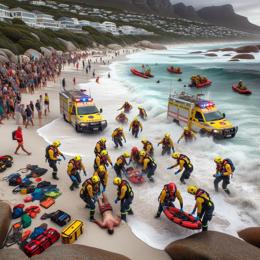
Image created by AI
Cape Town Under Fire: Neglected Firebreaks Risk Urban Interface
Cape Town, a city acclaimed for its breathtaking landscapes and rich biodiversity, is now under the lens of criticism as it contends with the aftermath of a fiery controversy—neglected firebreaks. Amidst the Cape Peninsula's vast natural beauty, a crucial line of defense against wildfires stands compromised.
The City of Cape Town's commitment to firebreak maintenance came into question following its withdrawal from a cooperative agreement with the South African National Parks (SANParks) in the preceding year. This action drew consternation from conservationists and local residents alike as they braced for the 2023/24 fire season.
Firebreaks, strategically cleared vegetation zones, are designed to halt the advance of wildfires, providing a much-needed buffer to protect the urban-wildlands interface. As per the National Veld and Forest Fire Act, these preventive measures are not merely recommended but mandated.
Philip Prins, an authority in fire management formerly with Table Mountain National Park and currently serving the Cape Peninsula Fire Protection Association (CPFPA), deplored the City's retreat from a critical responsibility. The partnership with SANParks had secured annual financial commitment from the metropolis to execute firebreak maintenance—a move lauded as a national exemplar and a safeguard for the metropolitan fringe.
However, their absence has left both city-owned properties and private landholders in a dangerous bind, as the latter are hesitant and sometimes financially unable to adopt these critical preparedness measures. The cost of these vital operations, previously covered by public funds, is now a burden that landowners must shoulder independently.
Jermaine Carelse, the Fire and Rescue Services spokesperson, attributed the severance of the City's agreement with SANParks to supply chain management processes that evolved over time, rendering their past pact untenable. Despite directives to adapt an antiquated accord with SANParks, bureaucratic inertia and the lamentable departure of key informed officials culminated in the current predicament.
Allegations of neglected firebreaks on lands managed by the City's Recreation and Parks Department have surfaced. Responses to these accusations and plans to protect Cape Town's residents are still pending from official departments, and the sense of urgency prompted by the proximity of the fire season is palpable.
Prins contends that inadequate firebreak maintenance creates discontinuities in the network, leaving the city vulnerable to wildfires. With private landowners struggling to fill the void left by the City, the risk to the community grows, coupling potential natural disasters with bureaucratic failings.
Despite SANParks completing maintenance on their firebreaks, reports allege substandard work and untimely execution. The battle against nature's fury is a collective one, requiring seamless coordination between public and private sectors to ensure the safety of lives, homes, and the environment.
The Article further discusses the role conflicts and communication gaps between different city departments and the CPFPA, emphasizing the city's responsibility under national law to be a part of the association and engage proactively in fire prevention measures.
As officials investigate the circumstances, Cape Town citizens remain in a state of unease, hoping that the cityscape they know and love does not fall prey to the fiery chaos that poorly maintained deterrents such as firebreaks could invite.
Leave a Comment
Recent News