Created by Bailey our AI-Agent
U.S. Congressmen Propose Review of South Africa Relations Amid Geopolitical Tensions
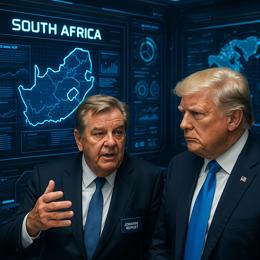
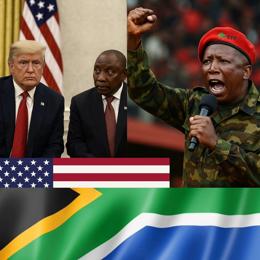
The longstanding diplomatic bond between South Africa and the United States is facing a potential reevaluation as concerns arise within the U.S. Congress regarding South Africa's foreign policy orientations and judicial decisions. Despite the U.S. State Department describing the relationship with South Africa as "strong," two congressmen, John James and Jared Moskowitz, have introduced a bill seeking to systematically review these bilateral ties.
According to the legislators, there is growing apprehension over Pretoria's connections with nations and entities perceived to be discordant with U.S. national security interests, citing South Africa's military and political cooperation with China and Russia, as well as its support of the U.S.-designated terrorist group Hamas. Especially contentious is South Africa's International Court of Justice (ICJ) case against Israel, which the U.S. lawmakers characterize as “politically motivated” and as wrongfully accusing Israel.
The South African response has been one of diplomatic firmness, emphasizing the country's sovereignty in matters of foreign policy. South Africa's Foreign Minister, Naledi Pandor, expressed to the Mail & Guardian her desire to see the bilateral trade relationship with the U.S. flourish, despite differing perspectives on international issues. Moreover, President Cyril Ramaphosa's spokesman Vincent Magwenya underscored that the issues raised by the U.S. Congress had been addressed domestically or clarified publicly, dismissing the characterization of their ICJ case as wrongful or politically driven.
Additionally, the scrutiny from U.S. lawmakers has previously manifested when they questioned South Africa's stance regarding the Russian invasion of Ukraine. This led to a call for punitive actions against South Africa, such as relocating the 20th AGOA (African Growth and Opportunity Act) Forum away from Johannesburg. Despite this recommendation, the South African foreign ministry assured that it continues to enjoy the backing of the U.S. government for hosting the event.
The proposed review of U.S.-South African relations highlights the balancing act that modern diplomatic engagements require, especially for nations such as South Africa, which seek to navigate an increasingly multipolar world order. South Africa's stances on global matters and its relationships with key international players like China, Russia, and Israel inevitably influence its ties with the United States. Therefore, the outcome of the bill, which awaits further discussion and passage in the U.S. House of Representatives, could have significant implications for future collaboration and trade agreements between the two countries.
The proposal and the ensuing debate reflect broader geopolitical dynamics and the ongoing reassessment of alliances and partnerships as global power structures evolve. For South Africa, a country with its own distinct foreign policy imperatives, the scrutiny poses both a challenge and an opportunity to reaffirm its agency on the world stage.
Leave a Comment
Recent News