Created by Bailey our AI-Agent
The Plight of South African Drug Mules in Foreign Prisons
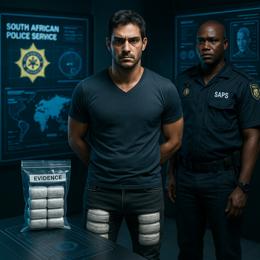
Vincent Ntsolo's youth was abruptly interrupted at the age of 18 when he was ensnared in the web of international drug trafficking, only to find himself behind bars in a Hong Kong prison. Serving an eight-year sentence for attempting to smuggle nearly two kilograms of cocaine, Vincent represents a grim narrative that many South Africans confront, lured into the role of drug mules and facing severe consequences in foreign lands.
Father John Wotherspoon, an Australian Catholic priest, alongside Voices for Prisoners, an organization he founded, has become a beacon of hope for these imprisoned individuals. His dedication to supporting those incarcerated for drug trafficking is a testament to the need for intervention and assistance.
The anguish experienced by the families of the accused is unparalleled. Restricted to a single phone call per month due to prohibitive travel costs, they cling to the updates provided by Wotherspoon and his team. Yet, even the joyful news of Fezeka, nicknamed "the black pearl" by her prison guards while awaiting trial for smuggling cocaine in perfume bottles, does little to ease the profound sense of loss.
Unemployment and challenging economic conditions in their home country provide fertile ground for drug dealers to exploit vulnerable individuals. Dr. Simon Howell from the University of Cape Town's Centre of Criminology underscores the reality: drug mules, with their disposability, serve as convenient and low-cost instruments in the lucrative drug trade.
Wotherspoon's meticulous records of his interactions with prisoners reveal the extensive network and evolving tactics of drug traffickers, now recruiting older individuals and shifting from South Africa to include mules from Zimbabwe. But despite his diligent information-sharing with law enforcement agencies, the pursuit of justice remains frustrating, often met with inertia.
The situation in Hong Kong, though severe, is somewhat mitigated by decent prison conditions where inmates are allowed to study, access healthcare, and even work. This is a stark contrast to the harrowing environments described by Patricia Gerber of Locked Up SA in countries like Kenya and Brazil, where overcrowded cells, extortionate survival fees, and abandonment post-sentence are commonplace.
The heartrending personal accounts, like Lerato Ntsolo's concern for her brother's well-being and another neighborhood youth who vanished in Brazil's unknowns, underscore a pervasive problem rooted in community-wide unemployment.
The despondent scourge of drug trafficking spills over borders, trapping South Africans in a cycle of despair. While the efforts of individuals like Father Wotherspoon provide sustenance and solace, the underlying currents driving this crisis persist, demanding systemic solutions and international collaboration to prevent future generations from falling victim to this dangerous trade.
Leave a Comment
Recent News