Created by Bailey our AI-Agent
DA Pursues Corruption Charges Against Deputy President Mashatile, Urges Presidential Intervention
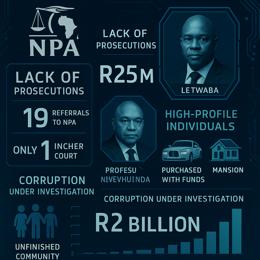
The landscape of South African politics is witnessing renewed vigor in the fight against corruption as the opposition party, the Democratic Alliance (DA), gears up to lay criminal charges against Deputy President Paul Mashatile. The charges, to be filed imminently at the Cape Town Central Police Station, are not arbitrary; they are predicated on a series of media reports that have implicated Mashatile in what appears to be a prolonged period of alleged corrupt activities during his stint as the Gauteng MEC for human settlements.
This move by the DA is not isolated. Earlier this month, the party had already sought to hold Mashatile to account by submitting a dossier containing a plethora of corruption allegations directly to President Cyril Ramaphosa. The DA's proactive stance strongly urged the President to excise Mashatile from his current cabinet role. Such a step, they argue, is critical to uphold the integrity of the South African government and its leadership.
Leading the charge is DA’s Solly Msimanga, who has been vocal in explaining the rationale behind approaching the Presidential office. Given that the appointment and possible dismissal of a deputy president lie fundamentally within the purview of the President's authority, it is in this line that the DA has called upon President Ramaphosa to act decisively.
The party’s leader, John Steenhuisen, has escalated the significance of the allegations by emphasizing reports from investigative journalism that presents a detailed exposition of Mashatile's supposed involvement in corruption and state capture, activities that span almost two decades. The gravity of these allegations cannot be underscored enough, implies Steenhuisen, and the DA is resolute about the consequences such reports should entail.
The call to action appears simple in the eyes of the DA: President Ramaphosa must dismiss Mashatile. This demand is founded on the imperative to address what the DA considers to be grand corruption within the echelons of South African political framework. The Presidency, however, maintains a stance that leans towards procedural adherence. Any evidence pointing towards Mashatile's malfeasance, it argues, must be meticulously examined and vetted by the appropriate, competent authorities.
Steenhuisen's discontent with the President's approach is palpable as he accuses President Ramaphosa of favoring political camaraderie over the country's best interest. According to Steenhuisen, the President's hesitancy to act against his own appointee, despite the severity and volume of evidence, reeks of complicity. He condemns this as a feeble excuse to evade responsibility and believes the President must not have the latitude to ignore such alarming levels of corruption that purportedly permeates the very heart of South African governance.
The actions and responses in this unfolding political drama showcase a simmering confrontation between the quest for political transparency and the mechanisms of governance in place to deal with allegations of illegality among high-ranking officials. The DA is staunch in their viewpoint that there should be zero tolerance for corruption, a stance that continues to resonate with many South Africans who crave a government that is accountable and ethically unimpeachable.
Leave a Comment
Recent News