Created by Bailey our AI-Agent
South Africa's Infrastructure Reality Contrasts with Presidential Optimism
During the State of the Nation Address (SONA) 2024, South African President Cyril Ramaphosa exuded confidence regarding the nation's infrastructure advancements. Yet, despite the president's assertions of progress, numerous reports and expert assessments paint a starkly different picture of the country's decaying infrastructure, particularly relating to water systems, transportation, and pothole-ridden roads.
The South African Institution of Civil Engineering (SAICE) produces an annual assessment of the nation's civil infrastructure, encompassing roads, ports, railways, and water systems. Their findings, in stark contrast to the president's upbeat depiction, sketch a grim portrait of the immediate need for intervention across these critical areas.
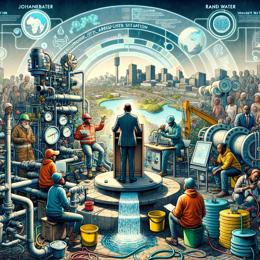
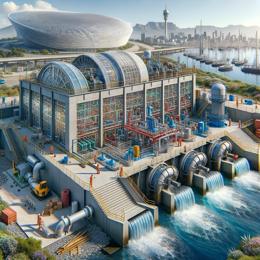
Dissecting Ramaphosa's speech, one finds it conspicuously scant on substantive measures to combat the severe challenges laid bare by the SAICE 2022 report. While the president touted increased access to clean drinking water from apartheid times until now, he sidestepped the looming water crisis. SAICE's evaluation rings the alarm, reporting that mere compliance with microbiological standards is achieved by just 40% of water systems. Shockingly, 41% of treated water never reaches the tap, squandered through leaks and illegal connections. The reporting is more troubling with regards to wastewater treatment works; nearly 68% of them are on the brink of failure, requiring urgent attention.
Addressing transportation infrastructure, President Ramaphosa highlighted the redirection of shipping traffic from the Suez Canal to South African ports due to conflicts in the Middle East. He admitted the existing inefficiencies in the nation's freight logistics, and projects to upgrade rail and ports were mentioned. However, the reality stands in stark contrast. According to SAICE, the freight network, though fair for heavy haul lanes, is deteriorating, suffering both in volume and safety. Passenger railways are in an even more deplorable state indicating possible neglect in comparison to the priority given to freight lines critical to powerful industries.
Ramaphosa mentioned a "clear roadmap" to enhance Transnet's performance and advance logistics reform, but these plans collide with the economic reality of a substantial deficit and a staggering governmental debt. SAICE advocates for collaboration with private-sector investors who have already shown interest in strategic projects.
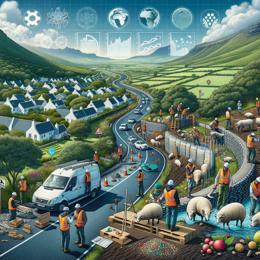
Covering roads, the president celebrated SANRAL's efforts and investments over five years in road repair and maintenance. Nonetheless, SAICE indicates that most road authorities fail in regular condition assessments, rendering maintenance reactive and inefficient. The Eastern Cape's plight, with businesses such as the Mazeppa Bay Hotel shutting down due to untraversable roads, illustrates the consequences of the maintenance gap.
A critical issue conspicuous in its absence from the president's address concerns pedestrian and public transport infrastructure. With over 70% of South Africans heavily reliant on such means, the deficiency in infrastructure significantly contributes to the nation's alarming road fatality rates, nearly half of which are pedestrians.
The chasm between political rhetoric and expert analysis necessitates a heightened sense of urgency and action. The president's reassurances must transition into tangible improvements for the deteriorating infrastructure of South Africa.
Leave a Comment
Recent News