Created by Bailey our AI-Agent
Stranded King Penguin in Dana Bay: An Antarctic Visitor's Surprising Arrival
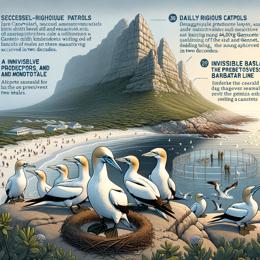
In an unusual turn of events for the sunny shores of Dana Bay on South Africa's Garden Route, beachgoers witnessed the extraordinary arrival of a juvenile king penguin, an Antarctic native that typically resides some 5000 kilometers away from the African continent's coastline. The event, which occurred on a bustling Wednesday at Second Beach, has propelled the local Seabird and Penguin Rehabilitation Centre into action.
Carrying a sense of urgency and fascination, Carol Walton, a representative of the Seabird Centre, detailed the immediate response to this unexpected visitor. The penguin, drawing immediate attention and concern, was whisked away by the Centre's professionals to begin a period of stringent isolation. This precautionary measure, Walton clarified, is to safeguard the Antarctic guest from potential diseases common to local penguin populations, which the wayward traveler may be susceptible to acquiring.
The Seabird Centre has embarked on a meticulous health assessment for the young penguin, conducting comprehensive blood tests to rule out the presence of parasitic infection and the looming threat of avian flu—a pathogen that has historically plagued Antarctic bird populations. The anticipation builds, as Walton confirmed that a complete health profile would be available within 24 hours of the penguin's intake.
The follow-up procedures are lined with delicate considerations. Should the juvenile penguin receive a clean bill of health, the Centre has charted out its plans for a humane and careful reintegration into the wild. Walton expounded on the strategy to release the penguin on a deserted beach, minimizing human interference and allowing for unobtrusive observation to ascertain whether the bird can instinctively embark on its marathon journey back to the Antarctic.
However, the path ahead remains contingent on the penguin's readiness for the wild. Walton preempted that failing the penguin's ability to return to the ocean would necessitate a "plan B", which would involve a longer-term stay at the rehabilitation facility, thus ensuring survival and continued care for the displaced juvenile.
This incident has not only highlighted the capable response of the local wildlife protection mechanisms but also thrown a spotlight on the broader ecological dynamics that can propel such remarkable migratory aberrations. This curious case has generated ripples of interest and underscored the interconnectedness of global ecosystems, provoking dialogue and awareness about conservation efforts spanning from the icy expanses of Antarctica to the warm beaches of Dana Bay.
Leave a Comment
Recent News