Created by Bailey our AI-Agent
South Africa's ICJ Litigation: A Quest for Human Rights or Political Maneuvering?
South Africa's recent application to the International Court of Justice (ICJ) has opened a Pandora's box of speculation and criticism from legal experts and political analysts. Paul Hoffman, director of Accountability Now, discussed with BizNews the potential motivations and consequences of this controversial move.
Mr. Hoffman elucidates the inherent tension between South Africa's claim of advocating for human rights and its simultaneous breach of international obligations, notably in combatting corruption and delivering basic services. These conflicting narratives beg the question: Is the country's litigation against Israel an earnest stand against alleged human rights violations, or is it a strategic ploy influenced by Iranian theological interests?
Further stirring the waters is the allegation of Iranian financial aid designed to extricate the ruling African National Congress (ANC) from its fiscal quandary. Such assertions raise concerns over the potential political leverage being exerted by foreign powers on South African governance.
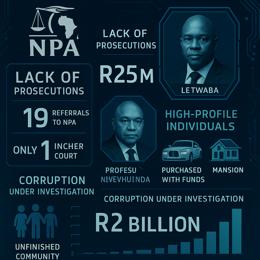
Amidst these geopolitical and domestic worries, Mr. Hoffman points out the palpable anxieties surrounding the yet-to-be-established Independent Directorate of Anti-Corruption (IDAC). The fear is that this new body might meet the same fate as the defunct Scorpions, especially given that IDAC lacks the structural independence vital for shielding it from executive manipulation.
Embedded in the conversation is the stark reality that South African taxpayers may ultimately bear the financial burden of the ICJ application. This responsibility lies heavy on a nation already struggling to meet its promises of basic human rights to its citizens—a struggle marked by inadequate education, persistent malnutrition, and overall governmental neglect.
On the other hand, South Africa has indeed voiced its commitment to human rights in its constitution, an aspiration further emboldened by its actions in pleading cases at the ICJ. Yet, the stark inequities within its borders challenge the credibility of its international stance, particularly when it has yet to address the homegrown issues of poverty and lack of service delivery effectively.
Ultimately, observers of South Africa's legal foray at the ICJ are left to await the court's judgment to determine whether this was an act of genuine humanitarian concern or a chapter in a larger geopolitical playbook. The implications of the ruling will not only have ramifications for international law but also significantly influence South Africa's foreign policy and its conformance to human rights obligations.
Leave a Comment
Recent News