Content created by AI
Tsunami Warning Follows Powerful 7.6 Earthquake in Japan
The serene landscapes of Japan’s Ishikawa prefecture were dramatically transformed yesterday when a 7.6 magnitude earthquake struck the region, causing widespread concern and leading to the immediate issuance of a tsunami warning. The debilitating force that rattled the Noto area at approximately 4:10 pm local time has been a stark reminder of Japan’s susceptibility to significant seismic activity.
As soon as the ground ceased its threatening rumble, Japan’s Meteorological Agency (JMA) did not hesitate to alert the surrounding coastal prefectures, including Niigata and Toyama, about the imminent threat of ensuing tsunami waves. The advisory broadcasted by NHK, Japan’s public broadcaster, couldn't stress enough the urgency for coastal residents to promptly retreat to higher ground in anticipation of possible waves towering up to 5 meters as predicted by both US and Japanese authorities for areas within a 300km radius of the quake’s epicentre.
In this crisis, Japan's swift emergency response mechanisms were immediately activated. Top government spokesperson, Yoshimasa Hayashi, addressed the nation, confirming that damage assessments were already underway and highlighted the necessity for residents to brace themselves for potential subsequent quakes.
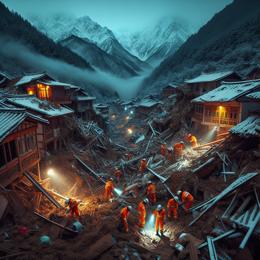
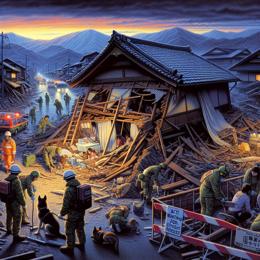
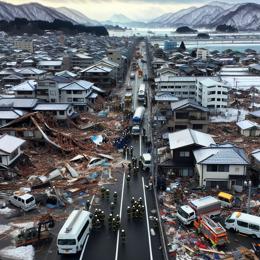
Visuals shared by NHK captured the earthquake's destructive prowess, with imagery of building collapses in Ishikawa showcased, while reports confirmed the reverberations were powerful enough to be felt in Tokyo, nearly shaking the metropolis to its core. NHK’s footage served both as a warning and a call for vigilance to those in potentially affected zones.
The earthquake’s influence extended to infrastructural operations, with Hokuriku Electric Power reporting an outage impacting over 36,000 households in both Ishikawa and Toyama prefectures. However, amidst the chaos, the nuclear regulatory board provided a sliver of relief, confirming no irregularities at nuclear installations across the Sea of Japan, which included five operational reactors at the Ohi and Takahama plants in Fukui prefecture.
Ishikawa's Shika plant, despite the proximity to the natural tumult, stood unaffected as it had preemptively suspended its reactors due to routine inspections. Neighboring South Korea also took precautions, with their meteorological agency forecasting a rise in sea levels along the Gangwon province's eastern coast.
This natural disaster dredges up memories of the catastrophic 2011 event that brought havoc upon northeastern Japan. The country continues to invest heavily in earthquake preparedness, and the recent emergency response reflects the lessons learned from past experiences. Nevertheless, the sudden emergence of this earthquake reaffirms the need for constant awareness and readiness to face nature’s unpredictable forces.