Content created by AI
South Africa's Ruling Party Faces Uncertain Future as Support Dwindles
In the lead-up to what many are calling a watershed moment in South Africa's political landscape, the African National Congress (ANC)—the party that has led the country since the end of apartheid in 1994—is confronting a significant decline in public support. Findings from a series of averages drawn from multiple surveys indicate that the ANC's backing has fallen to 43%, a revelation that could spell trouble for its future governance.
Professor Andre Duvenhage, a political analyst from North-West University, has been closely observing the shifts within South Africa's societal fabric. He points out that South Africa is facing complex moral, economic, and social crises unparalleled in its history. Political entities, he observes, are desperately clinging to power, often resorting to extreme measures to maintain their hold.
Duvenhage warns that the ANC's diminishing support base reflects a country at a crossroads, with the ruling party facing its most significant challenge since it became synonymous with the country's democracy. He draws parallels between the ANC's current situation and other liberation movements in Africa which stumbled around the 30-year mark, such as those in Zimbabwe and Angola.
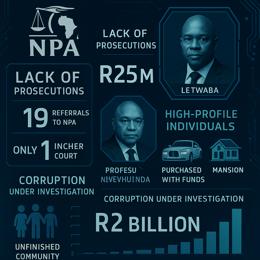
During a Christmas sermon at St George’s Cathedral, the anguish within South African society was echoed by Anglican Archbishop Thabo Makgoba, who lamented a nation "captured by lies, corruption, incompetence" and a populace increasingly disenchanted with seeking the truth. Makgoba's scathing critique highlighted a ruling class growing more brazen in their missteps as they face the possibility of losing power in the next election.
The anxiety over the potential for genuine regime change is palpable. Professor Duvenhage emphasizes how intertwined the ANC is with the country's systems beyond its role as an elected government. The ramifications of losing power could be profound, both for politicians and for the network of allies they have placed throughout state institutions.
These developments come at a time when South Africans are beginning to wrestle with the substantial transformative challenges required to move the country forward. There is a growing sense that the 2024 elections will not only determine who leads the nation but also define the very identity and integrity of South Africa's governance.
As political leaders grapple with an uncertain future, the strength of South Africa's democracy will be put to the test. Whether this election will manifest as a period of renewal or further degeneration remains an open question, one that all South Africans have a stake in answering.
Leave a Comment
Recent News