Content created by AI
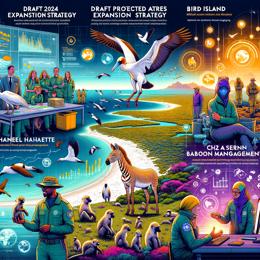
Cape Peninsula Seeks Public Engagement on Baboon Management Plan
The Cape Peninsula Baboon Management Joint Task Team (CPBMJTT) is calling upon the public to offer their insights and suggestions on the newly adopted Cape Peninsula Baboon Strategic Management Plan (CPBSMP). The plan, which is aimed at the conservation and management of Chacma baboons in the region, is being fine-tuned with the help of communities directly affected by the presence of these animals.
Understanding the ecological and sociopolitical landscape of the Cape Peninsula is crucial to addressing the human-wildlife conflict issues here. With an increasing number of encounters between humans and baboons, especially in urban-fringe areas, the CPBMJTT, comprising members from the South African National Parks (SANParks), CapeNature, and the City of Cape Town, is seeking to forge a unified approach.
The CPBSMP is designed to not only mitigate conflicts but also to accommodate the sustainable coexistence of humans and baboons. It emphasizes localized strategies that take into account the diverse needs, resources, and geographical nuances of each community. Implementing area-specific solutions ensures that conservation efforts are practical, effective, and supported by local residents, who are often the first line of interaction with the baboons.
The journey to the current strategic plan commenced with discussions and evaluations of existing baboon management practices. In June of the previous year, roundtable discussions yielded the groundwork for the draft plan, which was exposed to the public in January 2023, inviting comments and feedback. These efforts culminated in a stakeholder meeting in March in Tokai, where more than 800 individual comments were reviewed and incorporated into the planning framework.
The process represents an extraordinary model of collaborative governance, engaging not just the local and national policymakers but also the residents and the scientific community. The Memorandum of Agreement, signed in July 2023 by the three spheres of government, symbolizes this commitment to unified action and shared responsibility for the region's baboon population.
While the full CPBSMP is accessible for reading, local communities are particularly encouraged to delve into the specifics of baboon-proof fencing — an important component of minimizing human-baboon conflicts. The success of the plan relies heavily on public feedback to adjust the actions, strategies, and interventions to be as effective and community-friendly as possible.
Information on the ongoing process and further details about community engagement sessions are expected to be released early next year. With the public's active participation, there is hope for a future in which both baboons and humans can thrive in mutual respect and sustainable harmony on the Cape Peninsula.
Leave a Comment
Recent News