Content created by AI
South Africa's High-Speed Trains and Smart City Projects Gaining Traction
South Africa is gearing up for a revolutionary transformation in transportation and urban development. President Cyril Ramaphosa has shed light on significant strides being made towards realizing the high-speed train networks and the establishment of smart cities—ambitious plans first put forth in his 2019 state of the nation address. Despite initial criticism regarding these proposals at a time when the country faced severe economic and social challenges, it has become evident that these projects have transcended mere conceptualization.
Ramaphosa's recent written reply to a parliamentary question from DA leader John Steenhuisen brought an update on the progress. According to the President, the vision extends beyond the current trials, enticing South Africans to envision a future marked by cutting-edge transportation systems, smart cities, and an advanced hi-tech economy. These are not merely lofty goals but objectives that have received tangible planning and prioritization, especially in the last few years.
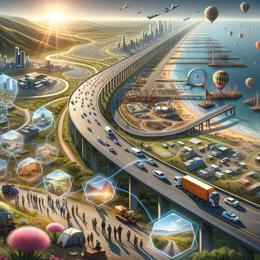
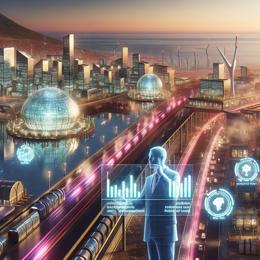
In the transport sector, a high-speed rail framework has been diligently formulated by the Department of Transport. This framework has internationally benchmarked criteria paving the way for South Africa to align with global standards. It has identified the Johannesburg to Durban corridor as a premier potential route for high-speed rail. This is followed by the Pretoria-Mbombela-Komatipoort and Johannesburg-Pretoria-Polokwane-Musina corridors. On November 1, 2023, the Cabinet gave the green light for this framework's implementation, signing off on a focused feasibility study for the priority Johannesburg-Durban corridor. Momentum gathers as plans include the establishment of a high-speed rail project management office, demonstrating a shift from planning to actionable steps.
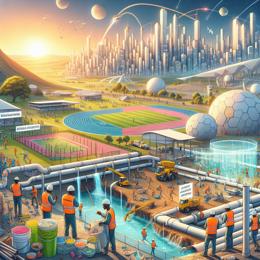
Parallel to this groundbreaking transport initiative is the foresight towards the development of fully functional smart cities in South Africa. Emblematic of this pursuit is the Lanseria project that seeks to stand as a new smart city with an anticipated population between 350,000 and 500,000 by the year 2030. The coordination and management of the master plan for this ambitious project fall under the Gauteng Growth and Development Agency's remit, which collaborates closely with local, provincial, and national government entities.
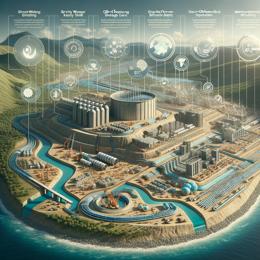
The urban settlement development grant allocated to the City of Johannesburg underscores the government's commitment to supporting the core infrastructure prerequisites for this development. Currently, the focus remains on crucial elements such as wastewater treatment facilities and strategic land acquisition, setting the stage for future urban habitation and digital integration.
These advancements not only embody President Ramaphosa's outward-looking vision for South Africa's future but also substantiate the government's dedication to transforming its infrastructure and urban landscapes fundamentally. This could usher in a new era of economic development and enhanced quality of living, albeit acknowledging that there's still a long road ahead.
Leave a Comment
Recent News