Content created by AI
Has Reality TV Gone Too Far? The Ethical Quandary of Modern Competition Shows
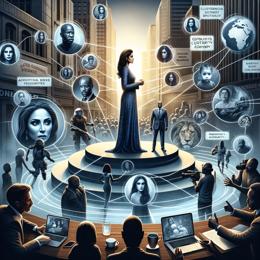
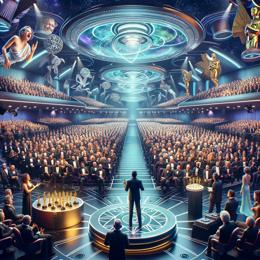
In the world of flashing camera lights and the relentless pursuit of ratings, reality television has evolved into an empire of human drama and competition. At the forefront of this is the recent announcement of 'Squid Game: The Challenge' being renewed for a second season, much to the delight and concern of the global audience.
The rise of reality-based competition shows can be traced back to the dazzling success of 'Survivor' which premiered in the early 2000s. Exhibiting a raw blend of human endurance and psychology, 'Survivor' carved out a new niche in entertainment, serving audiences' desire for an unscripted version of drama that fiction had long dominated. What made it more alluring was the concept of everyday individuals facing monumental tasks, allowing viewers to vicariously tackle these challenges from the safety of their homes.
'Survivor' proved that real life could be more compelling than scripted drama. Renders of fictitious crises were no longer the only drawcards; now, seeing real people struggle, strive and overcome was equally gripping, if not more so, and tremendously more cost-effective for producers. It established a new paradigm in show business, where non-professional actors, driven by desire for fame or fortune, would willingly surrender privacy for public scrutiny.
Yet, as we celebrate the genre's success, a shadow looms over its morality. With 'Squid Game: The Challenge' – borrowing its grim premise from the South Korean fictional series 'Squid Game', which ironically critiques capitalist society by putting its characters through a deadly competition for money – art imitates life and then life imitates art, forming a cycle that reflects a disturbing reality.
What does it say about our society when we gamify desperation and capitalize on psychological pressure for viewership? Are we normalizing a voyeuristic pleasure in the suffering or hardships of others? While the contestants in these shows are volunteers, and the stakes in real-life versions are nonlethal, there is a valid concern that the ethical lines are blurring.
It’s crucial to contemplate the subliminal messages we’re endorsing as consumers and creators. The unparalleled visibility and prevalence of these shows risk rendering us desensitized to their underlying severity. The contestants, though willing participants, are often subject to stress and manipulation – conditions designed to create the conflict that keeps audiences engaged. It poses a vital question – are we indulging in a form of modern spectatorship which parallels the 'bread and circuses' of ancient Rome, distracting us with spectacle whilst ethical implications are sidestepped?
Furthermore, the concerns of exploitation are not unfounded. The original 'Squid Game' series serves as a dark commentary on economic desperation and the extremes to which people are pushed when facing financial ruin. Translating this into a "game" in the realm of reality TV, how does it reflect on our empathy and our collective consciousness?
In essence, the line between satirical dystopian storytelling and the principles guiding real-life entertainment is becoming increasingly obscure. Critical voices echo the need for a revision in our appetite for reality TV content. Is it time for a new wave of entertainment, one that does not rely on the deconstruction of its participants for mass consumption?
As this debate intensifies, the industry might be at a crucial crossroads. Reality TV needs to start demonstrating a clear demarcation between entertainment and exploitation, respecting the humanity of its participants and audience alike. We must redefine the parameters of these shows to ensure that they provide engaging content without compromising ethical standards or glorifying human hardship.
While we relish the drama and unpredictability that reality TV presents, it might be worth pondering at what cost it comes. As viewers and contributors to the ratings that power these behemoths, we share responsibility for their impact. Moving forward, we must strike a balance, curating content that is conscientious, not just captivating. It’s a complex script to write, but our collective humanity may depend on it.
Leave a Comment
Recent News