Content created by AI
eSwatini Embraces Starlink: South Africa Left in Regulatory Limbo
The digital landscape of Africa is rapidly evolving as more countries embrace satellite technology to improve internet connectivity. A significant milestone in this transformation is the recent launch of Starlink satellite internet services in eSwatini, accelerating the continent's march towards better and more reliable internet accessibility. Elon Musk's ambitious Starlink project, under SpaceX, promises high-speed internet "almost anywhere on earth," leveraging an expanding constellation of low earth orbit (LEO) satellites.
While eSwatini celebrates joining the Starlink family, South Africa's journey to similar connectivity advancements stands at a crossroads. With neighboring countries like Mozambique, Zambia, Malawi, Kenya, Rwanda, and Nigeria already on board with Starlink, questions loom over South Africa's readiness and regulatory progress.
In a recent conversation with Bruce Whitfield, Nkosinathi Ndlovu of TechCentral provided insights into South Africa's position regarding Starlink's entry into the market. Although the Independent Communications Authority of South Africa (ICASA) signaled a regulatory hurdle, stating Starlink lacks the necessary operating license, the future for its services in South Africa is not entirely bleak.
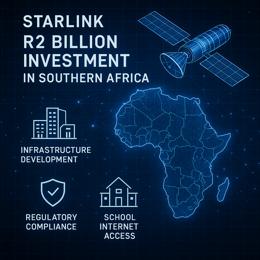
Notably, there has been an incremental step towards regulatory compliance, as ICASA released information showing that type approval for some of Starlink's equipment has been secured. This approval is vital, as it signifies the adherence of Starlink's hardware to South African technical standards. Despite this progress, the approval for the spectrum Starlink requires remains pending.
The apparent readiness of southern African nations in adopting satellite internet, juxtaposed with South Africa's regulatory delays, raises concerns about the latter's competitive edge in the telecommunications sector. Ndlovu highlighted the opaque nature of negotiations and approvals between SpaceX and ICASA, indicating that while it's arduous to track the exact status of the process, the preparatory moves by SpaceX suggest a clear interest in entering the South African market.
This interest aligns with a pattern witnessed across the continent, where Starlink's presence is rapidly growing. Observers might infer that SpaceX's actions imply a strategic intent to establish a footprint in South Africa sooner rather than later. The urgency for ICASA to navigate the regulatory landscape effectively comes at a time when the demand for reliable and fast internet is at an all-time high, driven by increased remote work, e-learning, and digital services necessitated by the ongoing global pandemic.
Consequently, South Africa stands at a pivotal moment. The potential benefits of Starlink's innovative infrastructure could significantly impact various sectors, including education, healthcare, and commerce, by bridging the digital divide. However, the pace at which these benefits are realized depends on the agility of South African regulatory bodies to align with the rapid technological advancements characterizing the information age.
Listen to the complete and insightful interview with Nkosinathi Ndlovu at the top of the article for an in-depth understanding of Starlink's current standing and prospective impact on South African connectivity.
Leave a Comment
Recent News