Content created by AI
South African Jewish Communities Question Country's Role as Peace Mediator in Israeli-Palestinian Conflict
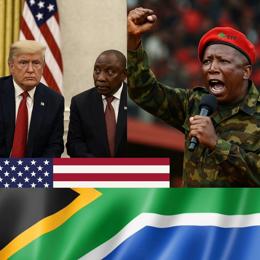
In a significant turn of events, South Africa's prominent Jewish and Zionist organizations have openly questioned the government's credibility to act as a peace broker in the historically entrenched conflict between Israel and Palestine. This skepticism emerged after a high-profile meeting with South African President Cyril Ramaphosa, which included dialogue not only on the country’s diplomatic relations with Israel but also addressed the increase in anti-Semitic incidents within South Africa’s borders.
The meeting, which brought together the South African Jewish Board of Deputies (SAJBD) and the South African Zionist Federation (SAZF), aimed to foster open communication with the President about the concerns of the Jewish community. These organizations represent a vital component of South Africa's religious and cultural tapestry. However, the discussions unveiled a profound uncertainty regarding South Africa’s ability to serve impartially in fostering dialogue and resolution in the Middle East.
In the wake of these developments, it is imperative to understand South Africa's role in international diplomacy, particularly in relation to its stance on the Israeli-Palestinian conflict. South Africa has long been an advocate for Palestinian statehood, often equating the Palestinians’ cause with its own historical struggle against apartheid. This has inevitably impacted its relations with Israel and the perception of its impartiality as a mediator.
Though it boasts of a constitution that is globally revered for enshrining human rights and embracing diversity, South Africa's own challenges with anti-Semitism could be seen to undermine its moral standing on the global stage. Alarmingly, reports suggest that anti-Semitic incidents have been on an upswing, causing distress within the Jewish community, and potentially affecting the nation's diplomatic posture.
Such concerns add another layer of complexity to South Africa's involvement in international peace efforts. Historically, the country has a legacy of transformative reconciliation, rooted in its transition from apartheid to a democratic society. This legacy has often been cited as valuable experience that South Africa could bring to the Israeli-Palestinian peace process.
However, the trust required for mediation does not solely rest upon past achievements; it's continuously shaped by current actions and policies. By expressing their reservations, South African Jewish groups have hinted at a possible discord between the government's international advocacy for peace and how it addresses domestic issues regarding cultural and religious sensitivities.
For South Africa to reaffirm its position as a reputable negotiator, it must address these domestic concerns head-on, fostering a culture of mutual respect and understanding within its borders, while also refining its diplomatic strategies to be perceived as even-handed abroad.
Moreover, the government's response to these statements will be closely monitored by international observers, as it may prompt a reassessment of its method to remain a proponent of dialogue and conflict resolution, not just in the Middle East but in other global territories in dispute as well.
The diplomatic path ahead for South Africa is nuanced and fraught with challenges. Nonetheless, as a nation that has overcome its own burdensome history, there’s an expectation, or at least a hope, that it can reconcile its internal issues with its aspirations for global peacekeeping.
Leave a Comment
Recent News