Content created by AI
Military Deployment in Peacetime: The Multi-Faceted Role of the SANDF Amidst South Africa's Crises
In an unprecedented shift from traditional military roles, the South African Defence Force (SANDF) has taken on a variety of domestic operations over the past three and a half years, racking up costs exceeding R3.4 billion. This vigorous engagement within the nation’s borders marks a pronounced departure from the primary role of the armed forces, raising eyebrows among some observers about the implications of such a transition on civil-military relations and the state’s dependency on its military.
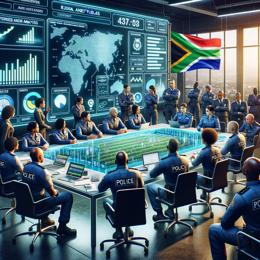
Originally conceived to defend against external threats, the SANDF's recent round-the-clock involvement in internal affairs began with the advent of the Covid-19 pandemic. Soldiers took to the streets, manning roadblocks and patrolling neighbourhoods as part of efforts to enforce lockdown mandates. This show of force in support of the South African Police Service (SAPS) was intended to curb the spread of the virus, yet it incited debates over the propriety of military involvement in civilian law enforcement.
The SANDF's mandate expanded as South Africa grappled with a surge in violent crimes, widespread looting, and infrastructure vandalism. Under "Operation Prosper," these deployments were credited with suppressing rioting that overwhelmed police forces in KwaZulu-Natal and parts of Gauteng, and safeguarding vital Eskom assets from sabotage contributing to the load-shedding crisis.
However, reliance on the military for what many consider police duties is not without criticism. Financial strains, such as the spectre of unpaid salaries due to budgetary constraints, compound the challenges faced by the SANDF. Analysts such as Darren Olivier of African Defence Review and Pikkie Greeff of the South African National Defence Union point to the long-term detrimental impacts on civil-military dynamics and advocate for a reconsideration of the government’s approaches to such issues.
The reinforcing of power utilities and intervention during the "national shutdown" protests led by the Economic Freedom Fighters (EFF) are other instances where the military was summoned to maintain order. Despite fears of unrest, heightened by provocative remarks from EFF leader Julius Malema, the deployments arguably helped avoid significant confrontations.
The more recent focus has turned to combating the scourge of illegal mining, which has plagued Johannesburg’s outlying areas. The SANDF’s involvement, alongside the SAPS, in tackling the aggressive and often violent operations of illegal miners, colloquially known as "zama zamas," signals an extension of military influence into what is predominantly a criminal justice issue.
Each of these deployments, while addressing immediate crises, has sparked debate about the appropriate use of military forces within South Africa and the inherent risks of becoming overly reliant on the armed forces for internal governance. The evolving role of the SANDF presents a profound challenge as the nation confronts the tension between stability, security, and civil liberties.
Leave a Comment
Recent News