Content created by AI
Assessing the Bumpy Road Ahead for Electric Vehicle Expansion
The automotive industry's surge towards an electrified horizon met with unexpected bends in 2023, causing legacy automakers and electric vehicle (EV) startups to revisit their ambitious strategies. Amidst a confluence of economic pressures and adoption barriers, these companies encountered a reality check, prompting a call for more substantial support from policymakers and strategic overhauls.
Detroit-based automakers had initially projected an investment of $1.2 trillion by 2030 to mainstream EVs, integrating batteries and software manufactured in-house. However, as consumer adoption doesn't match the industry's predictions, the focus has shifted towards managing the transition's escalating costs and regulatory challenges.
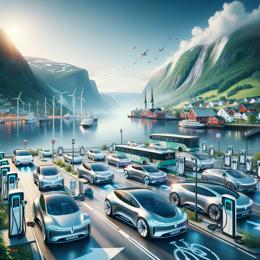
Interest rates have soared, propelling many EVs beyond the financial grasp of middle-income buyers, while the charging infrastructure, essential to enabling a seamless transition, remains insufficient. The lack of comprehensive charging solutions hampers buyer confidence, deterring them from committing to EVs over conventional gas vehicles, despite the growth in environmental consciousness.
AutoNation's COO Jeff Parent echoes a sentiment prevalent within the industry: the coming years are set to be "bumpy," foreshadowing a phase of recalibration and regrouping. This recognition of troubled waters ahead comes amidst a backdrop of robust enthusiasm for EVs worldwide, with the European and Chinese markets demonstrating particularly vibrant growth.
For example, Ford Motor Company experienced a momentary setback when it had to cancel a third work shift assigned to produce its celebrated F-150 Lightning electric truck due to inadequate demand, illustrating the risks of over-optimistic forecasting. Approximately 700 workers faced furlough as a result, highlighting the human impact of these market fluctuations.
The EV landscape shows variable acceleration patterns across different regions. With China leading an EV price war and deployment of government subsidies, EVs are becoming increasingly affordable there. Conversely, North American markets predict a sixfold increase in EV production, yet this still falls short of the desired targets set by the Biden administration.
Automotive executives, recognizing the gap between regulatory ambitions and on-the-ground realities, are intensively lobbying to adjust the stringent emissions rules that necessitate an aggressive two-thirds EV sales share by 2032—portraying this as out of step with the market’s current trajectory.
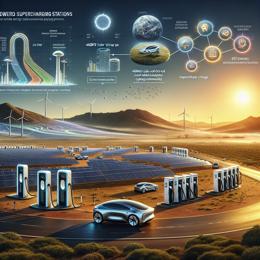
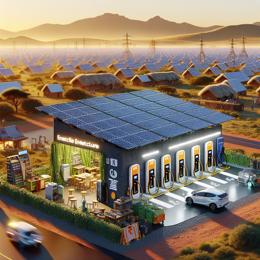
Indeed, this past year has witnessed an unprecedented move where competitors now turn patrons, as major legacy carmakers strike deals to tap into Tesla's potent Supercharger network. This capitulation underscores the industry-wide acceptance of the infrastructural hurdles dampening EV demand.
Tesla, the EV juggernaut, isn't immune to the winds of change either. Elon Musk's revelation that Tesla had to resort to price cuts to maintain production momentum, even though their EVs are more cost-intensive than popular models like the Toyota RAV4, speaks volumes about the multifaceted affordability challenge.
With the looming adjustments of tax credits linked to stringent domestic content regulations and the competitive pricing of gas-powered vehicles, the automotive industry encounters an intersection where survival hinges on adaptability and collaborative inventiveness—key to navigating this electric conundrum.
#GOOGLE_AD
Leave a Comment
Recent News