Content created by AI
Johannesburg's Fleet Contract Fiasco: Kickbacks or Coincidences?
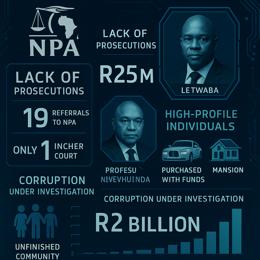
The City of Johannesburg's recent R1 billion fleet contract award to Afrirent has sparked controversy following an amaBhungane investigation that uncovered financial transactions to a known 'slush fund' benefitting Julius Malema and the Economic Freedom Fighters (EFF). The deal, which plays a pivotal role in ensuring the city's operational efficiency, fell into Afrirent's lap after bypassing a competitive tendering process that saw the previous frontrunner, Avis, stalled and subsequently sidestepped.
This revelation throws a wrench into the supposed transparency of Johannesburg's government. With the contract initially intended for the maintenance of 2,700 city vehicles, the irregular procurement processes raise serious questions about the potential for political influence, particularly from the EFF, in municipal decision-making.
Despite strenuous denials of wrongdoing from both Afrirent and the EFF, the timeline and connections hinted at by financial records have fueled suspicions of impropriety. Payments amounting to R500,000 were made by Afrirent to Mahuna Investments, a company directed by Malema's cousin, at a time when the fleet contract was up for grabs. This transaction matched previous patterns of fund flow intended for the EFF and Malema's personal expenses, disclosed in a prior Daily Maverick article.
The city and the current DA-led coalition's alleged complacency or potential acquiescence to the EFF's desires add another layer to the scandal. Insiders from the city, not least among them the Mayor Herman Mashaba, face accusations of sacrificing governance standards for political survival. Although the city rebuffs claims of politicians meddling in procurement processes, sources allege that the EFF had a significant grip on certain municipal departments and tenders.
In response to the allegations, the EFF denied exerting influence over the fleet tender, and Mahuna Investments' Phaleng justified the transfers as payment for legitimate services completed for Afrirent unrelated to the Johannesburg fleet. Afrirent itself, employing its legal team, insisted no wrongdoing on its part, confirming Mahuna was contracted based on operational needs for a separate project in Limpopo.
Amid the uproar, Afrirent's narrative is not necessarily sufficiently convincing given its timing, juxtaposition of events, and the lack of transparency about its agreement with Mahuna Investments. The company's statement and evidence aim to detach this relationship from the controversial fleet contract—a claim complicated by the probe's findings.
It remains for the city's Group Forensic Investigation Services to shed light on the matter, which is under ongoing investigation. Any definitive disclosure of the true nature of these transactions could have profound implications not only for the parties directly implicated but also for the city's administration and governance paradigms as a whole.
As the Johannesburg fleet contract debacle unfolds, it exemplifies the potential intertwining of public contracts and political influence, challenging the integrity of municipal governance and highlighting the crucial role of investigative journalism in scrutinizing and unearthing the opaque maneuvers behind publicly significant deals.
Leave a Comment
Recent News