Content created by AI
Nvidia Acknowledges Huawei as a "Formidable" Competitor in AI Chip Market Amid US-China Trade Tensions
In an industry where technological advancements happen at lightning speed, Nvidia Corp, a pioneer in AI accelerators, recognizes the rising competition. At the heart of this competitive wave is China's Huawei Technologies Co., dubbed by Nvidia’s CEO Jensen Huang as a “very formidable” opponent. This acknowledgment came amidst Huang's press meeting in Singapore, where he illuminated the challenge posed not only by Huawei but also by Intel Corp and a number of semiconductor startups.
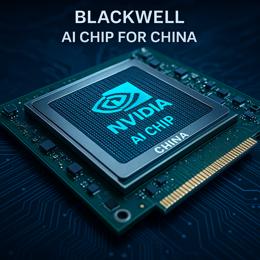
The AI chip market is crucial to powering advanced data models, such as those behind the revolutionary ChatGPT. Nvidia, which calls Santa Clara, California its home, has historically led this market, with their chips being the go-to hardware for AI development. Despite the industry's competitive nature, Nvidia's commitment to innovation remains unwavering, with a promise to introduce new products that align with the stringent trade regulations recently imposed by the United States.
These regulations have been a response to growing concerns over China’s technological ascendancy, with Commerce Secretary Gina Raimondo issuing a stark prohibition on the sale of advanced chips to China. The importance of complying with these directives was not lost on Huang, who emphasized Nvidia's intent to adhere “perfectly” to trade laws. Amidst these developments, Huawei, a tech behemoth based in Shenzhen, has been in the limelight with its advanced smartphone processors, signaling a closer race in AI chip production.
Singapore, the garden city-state, plays a pivotal role for Nvidia, facilitating the company's dealings with Chinese firms despite geopolitical headwinds. Huang mentioned the city’s digital economy ambitions and its significance in Nvidia's business, with sales there tallying up to a substantial portion of their revenue.
Further emphasizing the strategic nature of the semiconductor industry, the US-China trade dynamic has put companies like Nvidia in a position where they must balance compliance with legal constraints and the need to maintain market dominance. Nvidia's foresight in adapting their offerings for the Chinese market, while conforming to new US policies, showcases the delicate dance international companies must perform in today's global economy.
As Nvidia continues to navigate these intricate challenges, the presence of competitors like Huawei serves as a testament to the thriving innovation in the AI chip market. While trade regulations may alter the market landscape, the demand for cutting-edge AI capabilities remains unabated, with Nvidia at the forefront of this technological arena.
Leave a Comment
Recent News