Content created by AI
South Africa's Electric Vehicle Transition Hinges on Renewable Energy, Declares Minister Patel
The South African government has, through the voice of Trade, Industry and Competition Minister Ebrahim Patel, highlighted the urgent need for a rapid transition to renewable energy sources to support the burgeoning electric vehicle (EV) industry. This call to action was prompted by the release of the long-anticipated Electric Vehicles White Paper which outlines the national strategy for embracing EVs.
South Africa is poised at a critical juncture, with its automotive sector contributing significantly to the nation’s GDP and employment. As global markets pivot away from internal combustion engine vehicles (ICEVs) in favor of EVs, Minister Patel underscores the necessity of ensuring that this transition is buttressed by a cleaner, more renewable energy grid.
The country’s power industry currently holds the top spot as the most significant polluter, closely followed by the transport sector, with road transport emissions accounting for a staggering 91.2% of the transport total. Acknowledging the imminent risk to the country’s automotive manufacturing industry, Minister Patel iterates the importance of adopting electric vehicles not only for climate purposes but also to maintain industrial competitiveness.
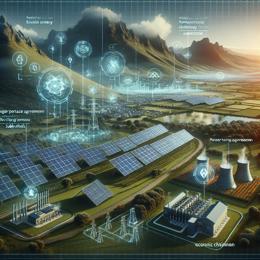
The EVs White Paper is groundbreaking in its vision for South Africa to integrate into the global shift from ICEVs to EVs and hybrids. Crucially, it envisions a future where the national energy mix is substantially comprised of renewable energy sources, a step that is essential for the climate change value proposition to domestic consumers.
While South Africa struggles with energy shortages and a coal-dominated energy mix, a greener grid becomes not only an environmental imperative but also a strategic industrial policy. Minister Patel acknowledges these contemporary challenges, emphasizing the necessity of integrating EVs into a robust infrastructural network that can withstand a high load factor.
This directive is especially pressing given that most South African-manufactured vehicles are for export to regions planning to ban ICEVs. This presents a potential economic hazard if the country cannot pivot to manufacturing more EVs for the global market—a task that is currently hindered by the lack of local EV production.
The Electric Vehicles White Paper is a multifaceted blueprint for the country's automotive industry, with the initial phase focusing on bolstering production capabilities and the second phase aimed at stimulating consumer demand for EVs. The White Paper serves as a roadmap that confronts potential hurdles such as high EV costs, lack of demand-side support, and the broader socio-economic ramifications of the transition.
As part of the pathway to electrifying South Africa's transport sector, the government expects the price gap between EVs and ICEVs to narrow in the coming years, potentially accelerated by technology advancements. However, there's also cognizance of the broader impacts, like the future role of service station attendants and mechanics in the changing landscape, and these social aspects are carefully considered in the White Paper.
By pursuing a robust transition to electric vehicles powered by
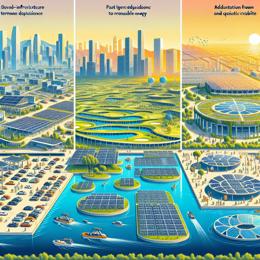
renewable energy, South Africa not only addresses climate change concerns but also safeguards a significant economic segment. This delicately balanced approach strives to ensure a sustainable and competitive future for the country within the global automotive industry.
Leave a Comment
Recent News