Content created by AI
Celestial Spectacles in December: NASA's Guide to Meteor Showers and Rare Asteroid Sightings
Sky enthusiasts and stargazers are in for a delightful celestial treat this December, according to the National Aeronautics and Space Administration (NASA). The agency has outlined a series of skywatching opportunities that are sure to captivate anyone looking up at the night sky. The month's highlight is undoubtedly the Geminid meteor shower, dubbed by NASA as "the year's most reliable meteor shower," with an impressive frequency of potentially one meteor every minute during its peak.
The Geminid meteor shower is expected to reach its zenith on the night of December 13th, with the best viewing times for different hemispheres. For those located in the Northern Hemisphere, the show begins at around 21:00 or 22:00. Meanwhile, stargazers in the Southern Hemisphere should be prepared to venture out in the middle of the night to catch the mesmerizing display. While viewers in the south might see fewer meteors, the show remains a must-watch event.
Continuing with the interstellar extravagance, several planetary sightings will grace the night sky throughout December. The moon will make appearances in close proximity to various planets, offering a unique visual treat and an excellent chance to observe our celestial neighbors with greater clarity. These planetary rendezvous present not just a fascinating spectacle but also an educational opportunity for those keen on learning more about the solar system's mechanics.
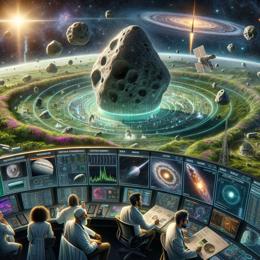
Adding to December's cosmic lineup is the rare opportunity to see an asteroid with the naked eye. The asteroid Vesta, expected to be visible in the night sky, can be better observed through binoculars or a telescope, giving avid skywatchers and amateur astronomers alike the chance to track this space rock as it journeys past our planet. Vesta will become particularly visible around 22:00 each night, with the optimal viewing window between 01:00 and 02:00. On December 8th, Vesta will make its appearance between the bright stars of the Betelgeuse supergiant and the Propus star system, serving as a guiding reference point for observers trying to locate this celestial body.
As the year draws to a close, NASA's skywatching tips provide an invitation for everyone to look up and appreciate the wonders of the universe. Whether it's experiencing the streak of a meteor lighting up the night or spotting the faint glow of an asteroid, these moments remind us of the vastness of space and our place within it. December's skywatching events promise to offer a spectacular end to the year and a galvanizing glimpse into the cosmos that surrounds us.
Leave a Comment
Recent News