Image: AI generated for illustration purposes
Volkswagen's Concerns Signal Potential Setback for South African Auto Industry
The evolving landscape of the global automotive industry, with a significant emphasis on electric vehicles (EVs), presents both an opportunity and a mountainous challenge for car manufacturers worldwide. In light of these changes, recent statements from Volkswagen Passenger Cars CEO Thomas Schafer have cast uncertainty over South Africa's role in this automotive evolution.
The backdrop of Volkswagen's apprehensiveness stems from the daunting issues South Africa faces: persistent load-shedding, rising labour costs, and operational inefficiencies within Transnet, the country's large state-owned enterprise responsible for freight rail and logistics. These factors have tarnished the appeal of South Africa as a location for building cars, especially for a brand like Volkswagen, whose focus is increasingly on cost-saving measures, improved profitability, and competitiveness in the transition to electric mobility.
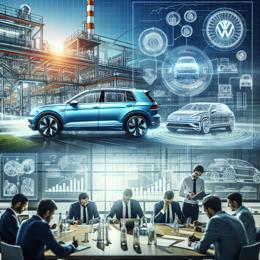
Volkswagen's current drive is inexorably linked to the future of electric cars. The German auto giant is gearing up to introduce ten new electric vehicles by 2026, backed by an impressive investment of nearly $200 billion over five years dedicated to increasing production capabilities. However, the South African market poses a significant quandary for Volkswagen due to its consumers' limited purchasing power for EVs and the country's distance from key sales markets.
This hesitation is compounded by the fact that Volkswagen South Africa has no impending plans to manufacture EVs locally, which precludes the region from benefiting from the burgeoning sector. In 2022, South Africa witnessed the sale of just 502 passenger EVs across all brands. To contextualize the gap, Steffen Knapp, the head of Volkswagen Passenger Cars in South Africa, indicated that the company would need to hit annual sales volumes of over 500 units to warrant bringing an EV model to the local market—an ambitious target given the current scenario.
The National Association of Automobile Manufacturers of South Africa (Naamsa) and its CEO, Mikel Mabasa, echo the sentiment of concern. Mabasa emphasizes that the sluggishness of the South African government in developing new energy vehicle (NEV) policies poses a clear and present risk to the local automotive manufacturing industry. Highlighting the gravity of this industry's contribution to economic growth and job creation, Mabasa pointed out that the ultimate battle lies not between car manufacturers but rather between countries and their capabilities to provide an attractive environment for industry success.
The global car manufacturing firms' headquarters are at a crossroads, urgently seeking to identify the most viable locations for their next production lines. Policy certainty is a linchpin for these decisions, and the perceived inertia of the South African government could pressure local manufacturers, potentially jeopardizing their positions in the international automotive sphere.
It's imperative to note that the concerns raised by Volkswagen and industry analysts are not intended as financial or investment advice but rather as a critical observation of the prevailing challenges faced by the auto industry in South Africa. The ability to adapt to these challenges will be a decisive factor in determining the future positioning of South Africa within the global automotive arena.
Leave a Comment
Recent News