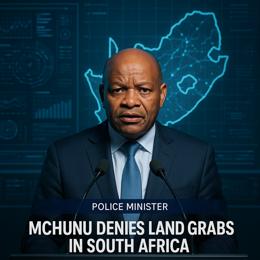
Image: AI generated for illustration purposes
The Irony of South African Politics: Navigating a Landscape of Contradictions and Hope
The political atmosphere in South Africa is astir with anticipation as the nation approaches another electoral juncture. Within the complex weave of South Africa’s sociopolitical fabric, a multitude of ironies stand out, reminiscent of scenes from a bygone era when people believed in the sweet nobility of sacrificing life for one's country, a sentiment immortalized by Wilfred Owen as "the Old Lie".
In South Africa, those ironies are deep and multifaceted. They span historical triumphs and contemporary challenges, melding the revered legacy of Nelson Mandela and his shared Nobel Peace Prize with FW de Klerk—a symbol of reconciliation against a backdrop where the dynamite inventor Alfred Nobel's legacy ironically funds this prize, reflecting again the duplicity of progress and destruction.
Furthermore, the African National Congress (ANC) paradox stands striking—on one side, it is historically a harbinger of freedom, yet on the other, it negotiates with former oppressors to pen a constitution guaranteeing equality. This clangor of contradictions echoes through the voices of icons like Lincoln, Malcolm X, and Martin Luther King Jr., and reverberates through South African stalwarts like Bishop Tutu and Allan Boesak. Yet, these ironies seem lost in the political tumult as the nation prepares for a democratic exercise fraught with both cynicism and hope.
Coherence in opposition appears to be a pipedream amidst a society divided and categorized by economic disparities and historical labels such as "coconuts" or "wannabees". These entrenched ladder-climbers appear to skirt around the edges of the deeper truths calling for recognition and action, often met with little more than a patronizing nod.
The narrative speaks to the South African condition—a struggle to balance the ideal of true equality against economic and political pragmatism. The penning of the constitution, a document designed to enshrine the values of a fair and just society, juxtaposes with the polarizing politics of today, where past voices and battles seem to be fading in the memories of the electorate.
Politicians and citizens alike are called upon to reassess what it means to be active participants in a democratic system where voices echo through the ballot. Statements like "Here am I. Send me," uttered by the president, serve as a call to arms against injustice, yet the rhetoric often fails to align with the reality on the ground—a reality of entrenched power struggles and the divide between the haves and the have-nots.
South Africa finds itself at a crossroads, between the necessity of recognizing its political progress and the urgent demand to address the lingering ramifications of its apartheid past. While the electorate must acknowledge the sacrifices and victories of the ANC, which earned its place in history through its arduous struggle, they must also critically evaluate whether the current political framework adequately addresses the stark inequality that persists.
If the nation is to avoid another turbulent encounter with fate, reminiscent of past revolutions and societal upsets, political engagement must evolve. It must transition from shallow victory speeches and power gambits, to substantiated action plans yielding real outcomes that diminish the rift between prosperity and poverty.
The "mango" facing South Africa, symbolizing impending chaos, must be met with a populace awakened to the political nuances that sculpt their reality. As such, South Africans are encouraged to step forth with their thoughts, critiques, and hopes for the future, contributing to a collective striving towards a landscape that balances its ironies with equitable solutions.
Leave a Comment
Recent News