Image: AI generated for illustration purposes
Diplomatic Impasse: Iran Advances Nuclear Program Amid Regional Turmoil
The geopolitical chessboard is once again in a state of high tension as Iran forges ahead with its nuclear program amidst a turbulent regional backdrop marked by the ongoing Gaza conflict. With US elections on the horizon, the window for diplomatic initiatives is narrowing, leaving the United States and its European allies grappling for a strategy to address Iran's actions in a polarized international environment.
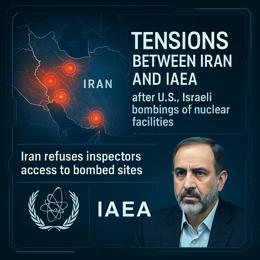
The urgency of the situation has been underscored by two confidential reports from the International Atomic Energy Agency (IAEA), which indicate that Iran has amassed enough highly enriched uranium for the potential creation of three nuclear bombs. The country's enrichment to 60% purity, a stone's throw away from weapons-grade material, is a brazen stride away from the limits of the now-defunct nuclear deal known as the Joint Comprehensive Plan of Action (JCPOA).
Attempts to resurrect the JCPOA, abandoned by former President Trump and unrevived by his successor, face obstacles not only from the regional chaos but also from the political constraints of an approaching US election. Conversations with seven diplomats, insisting on anonymity due to the sensitive nature of the subject, reveal a shared vision of stagnation in America’s and its allies’ ability to effectively rein in Iran’s nuclear aspirations.
President Biden’s administration, cognizant of the political optics playing into election narratives, finds itself in a policy cul-de-sac. Engaging with Iran could provide political fodder for potential opposition, particularly from figures like Donald Trump, who advocate for a hardline stance against Tehran. Such is the environment in which the notion of an “understanding,” which would entail easing sanctions in exchange for Iranian nuclear constraints, seems increasingly far-fetched.
The recent onslaught initiated by the Iran-backed Hamas against Israel has compounded the geopolitical complexities. These actions have provoked responses such as the deployment of US aircraft carriers to the region as a deterrent, though Washington remains clear that escalation is not the preferred course.
Moving forward, focus pivots to the upcoming IAEA Board of Governors meeting, where the response to Iran's advancements will be under scrutiny. Although Iran permitted the partial reinstallation of monitoring equipment, their continued stonewalling on fuller transparency and their barring of senior IAEA inspectors points to challenging negotiations ahead.
Indeed, diplomats suggest that while a stern resolution from the IAEA board might be justified, it risks exacerbating an already precarious equilibrium, possibly provoking Iran to enrich to the 90% threshold for weapons-grade uranium.
For now, the immediate aim is to support the efforts of IAEA chief Rafael Grossi in bolstering the oversight of Iran's nuclear program as the international community navigates the tightrope of diplomacy, deterrence, and the pressing imperative to avert a full-blown nuclear crisis.
Leave a Comment
Recent News