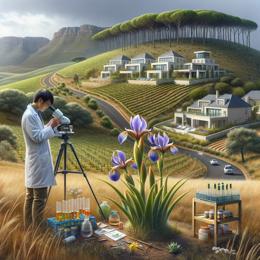
Picture: for illustration purposes
NASA and University of Cape Town Kick-off Groundbreaking Biodiversity Field Campaign, BiOSCapE
NASA, in cooperation with the University of Cape Town, has embarked upon a pioneering biodiversity field study, BioSCape, in the Western Cape. As part of this project, NASA will deploy two modified jets, a Gulfstream III and possibly a Gulfstream V, in Cape Town for four to six weeks.
This innovative venture funded by NASA is slated to run until 2024 and is primarily intended to deepen our understanding of the biodiversity and ecosystems of the Greater Cape Floristic Region (GCFR). This includes the surrounding coastal and marine environments.
The BioSCape project will integrate satellite and aerial data along with on-ground observations. This comprehensive approach will empower the global scientific community with profound insights into the region's wealthy biodiversity. It also aims to catalyse the mapping of marine, freshwater and terrestrial species within the ecosystem.
The jets assigned to the project will be utilized to gather ultraviolet, visual, and thermal imagery data. Vegetation structure and height will be measured via LiDAR technology. Additionally, satellites and ground teams will document plant and animal life to map biodiversity, demarcate ecosystem boundaries, and comprehend ecosystem structure and composition.
Dr Jasper Slingsby, a distinguished South African scientist and a faculty member at UCT, believes that the BioSCape project could reveal new insights about the region's rich biodiversity. He also noted that the collected data would be instrumental in developing efficient strategies for conserving and managing the myriad ecosystems in the area.
The project is strategically timed for late October to early November to capture the flowering of fynbos plants and align with the region's weather patterns. In addition to NASA and UCT, several South African research and conservation partners, including NRF, SAEON, SANBI, SANSA, SANParks and CapeNature, are part of the project.
Leave a Comment
Recent News