Image created by AI
NASA Innovations Make TIME’s Top Inventions List for 2024
The latest list of groundbreaking inventions as collated by TIME Magazine features significant contributions from NASA that promise to propel humanity further into the cosmos. Recognized for their groundbreaking technologies, NASA’s inventions are set to redefine space travel, communication, and the hunt for extraterrestrial life.
In a press release, NASA Administrator, Bill Nelson, praised the “wizards” of the NASA workforce for being pioneers in technology for over six decades. The agency's recent work includes the development of the Europa Clipper, set to explore Jupiter's moon Europa, the crafting of an innovative solar sail system for space propulsion, and a milestone in deep space communication, all of which were highlighted among TIME's Inventions of 2024.
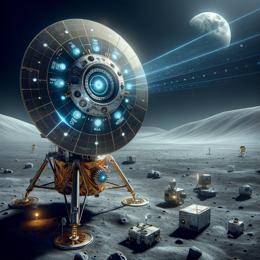
The NASA Advanced Composite Solar Sail System is among the celebrated innovations. Launched aboard a Rocket Lab's Electron rocket, this technology utilizes sunlight, akin to wind for a sailboat, for spacecraft propulsion. Lighter and more robust than previous models, the solar sails, supported by composite booms, present a sustainable alternative to chemical and electric propulsion systems. The deployment of this system in space has been successful, and the maneuvering trials in orbit will determine the feasibility for future missions requiring unique vantage points, such as early-warning satellites for space weather.
Similar recognition has been given to NASA’s Deep Space Optical Communications experiment aboard the Psyche spacecraft. Since launch, the system has delivered exceptional downlink data rates from vast distances, even achieving communication at the farthest distance between Mars and Earth. This breakthrough heralds a new era in high-speed data transmission, which has been showcased through the transmission of high-resolution videos across millions of miles of space.
NASA also peers beneath the icy crust of Jupiter’s moon, Europa, with the Europa Clipper mission. As the first mission dedicated to studying an ocean world, signs of organic compounds and energy sources have sparked immense interest in the potential for life. Scheduled to orbit Jupiter and make close passes to Europa, the mission’s suite of nine instruments will assess the icy shell and what lies beneath, probing for life-supporting conditions. This quest leans on sophisticated technology managed by NASA's Jet Propulsion Laboratory.
Behind these feats are NASA’s various research and technology centers. The Ames Research Center oversees the Advanced Composite Solar Sail System, while the Langley Research Center has designed the sail systems. The Deep Space Optical Communications experiment involves collaboration from NASA’s Marshall Space Flight Center and builds on technology developed by NASA's Small Business Innovation Research program.
In conclusion, these remarkable inventions underscore NASA's continuing legacy of technological excellence and commitment to exploring our universe. The recognition from prestigious platforms such as TIME highlights the importance and potential impact of such developments, both for space travel endeavors and our understanding of life in the universe.
Leave a Comment
Recent News