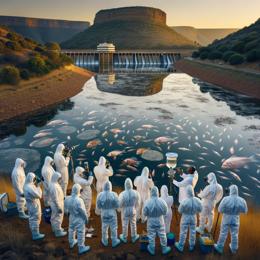
Image created by AI
Ensuring Safe Drinking Water in Johannesburg Amidst Supply Cuts
The city of Johannesburg has faced significant challenges with its water supply, leading to widespread concern among its residents about the safety of their drinking water. Extended cuts to the water supply system have raised questions about the potential risks to the city's drinking water quality.
Professor Craig Sheridan, an expert in environmental studies at the University of the Witwatersrand, offers critical advice on ensuring that the water from the taps remains safe to consume. According to Sheridan, South African water treatment facilities are generally equipped to remove harmful chemicals and pathogens from the water supply. The use of chlorine in the disinfection process not only eliminates dangerous bacteria and viruses but also leaves behind a residual amount that continues to safeguard the water as it travels through the pipelines to households.
However, Sheridan warns that these protective measures depend on water treatment plants operating efficiently, which is not always guaranteed. The Blue Drop reports, which audit the quality of water treatment works, have shown a worrisome trend with a declining quality of drinking water across South Africa, and 46% of the water being classified as unacceptable.
In the face of service disruptions, an additional risk arises when water supply is restored. The initial water following a cut—referred to as "first flush"—may carry contaminants into the pipeline. Sheridan advises residents to run their taps until the water is clear, using the initial flow for non-consumptive needs like watering plants or flushing toilets.
For areas where tap water is not accessible or during times of uncertainty about the treatment works' efficiency, residents are encouraged to boil the water before use or rely on purified water options.
Sheridan also sheds light on the burgeoning business of water supply through tankers, especially in neighborhoods with no access to treated municipal water. This method of water supply could be rife with fraud and low-quality products, a significant concern given that more than 4 million South Africans lack access to piped tap water.
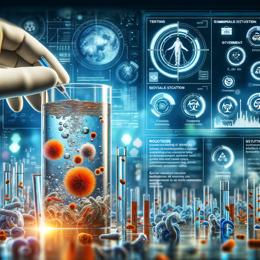
To address concerns about waterborne diseases such as cholera, Sheridan highlights the importance of testing water for the presence of E. coli as a marker for fecal contamination. The prevalence of E. coli in water indicates potential exposure to more severe pathogens, warranting immediate action and the use of purified water.
Efforts are underway at the University of the Witwatersrand to create test strips for a quick analysis of drinking water quality that can be easily understood by the public. Meanwhile, educational materials about preventing cholera transmission and purifying water have been disseminated in various languages to maximize public awareness and safety.
Residents of Johannesburg and surrounding areas are advised to stay informed and vigilant about their water quality, taking precautionary measures as necessary to ensure the safety of their drinking water.
Leave a Comment
Recent News