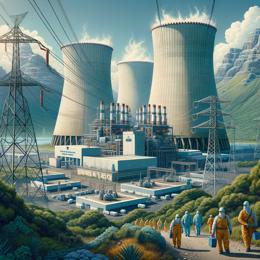
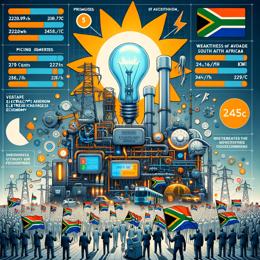
Image created by AI
Eskom in Crisis: Independent Report Calls for Urgent Overhaul Amidst Political Challenges
An independent investigation spearheaded by a German energy consortium vgbe exposes the deep-seated mismanagement plaguing Eskom, South Africa's primary electricity supplier. The report presses the governing ANC party and incumbent officials, particularly Finance Minister Enoch Godongwana, to confront politically sensitive decisions required to address the utility's organizational failures. With national elections looming, the stakes are high as the country grapples with frequent power cuts and financial turmoil threatening Eskom's sustainability.
vgbe’s findings pinpoint a convoluted management system rife with excessive bureaucracy, which forms the fulcrum of Eskom’s struggles. The imposition of committees and approval layers, as noted in the report, critically hampers decision-making efficacy, leaving Eskom's coal fleet at a debilitating energy availability factor (EAF) of just 51 percent – a poor showing compared to the global benchmark of 78 percent. This figure highlights the inefficiency shadowing Eskom's costly plant maintenance investments which, paradoxically, do not align with the advanced age of the infrastructure often seen operating at higher capacity levels internationally.
The report does not shy away from advocating radical reforms, mirroring those of European utilities, to slim down the organization’s bloated structure. Among the more contentious suggestions is the privatization of power station operations and the introduction of emergency procurement to circumvent the entrenched procurement constraints. These measures, however necessary, bare potential accusations of sidelining empowerment regulations, igniting debate over privatization versus public benefit.
One of the most critical issues raised by vgbe’s audit revolves around power disruptions, which risk escalating to Stage 13 in the event of shutdowns at key power stations. Notably, Medupi and Kusile plants, despite their relatively high EAFs when privately managed, clearly demonstrate the advantages of outsourcing to experienced third-party firms. The report underscores operational inflexibilities and inadequate management practices as culprits in Eskom's faltering systems, with Kusile's subpar performance attributed to both design flaws and negligent operational practices.
The specter of taking Eskom through a comprehensive reform and downsizing process bears heavyweight political implications, questioning ANC’s readiness for such decisive action. With Finance Minister Godongwana previously committing to leveraging private sector acumen for Eskom's coal-fired stations as part of a debt relief strategy, it remains uncertain if this pledge will endure through the controversial tides of the report.
Awaiting implementation, the vgbe assessment places Eskom at a crossroads where expedient and effective overhaul is juxtaposed against political will and economic necessity. The ANC's response could have far-reaching implications for public perception and trust in governance, shaping the political landscape ahead of the upcoming elections, and ultimately dictating the lifespan of Eskom's crisis.
Leave a Comment
Recent News