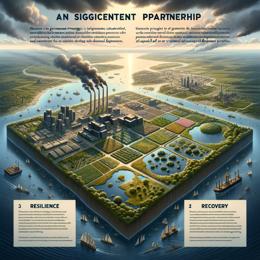
Image created by AI
Hope Floats for Mpumalanga Rivers as Tiny Tilapia Spearhead Renewal After Mining Devastation
The waters of Mpumalanga's once-placid rivers are witnessing a veritable renewal, symbolized by the release of tiny fish into streams that ran dead for a year due to the desecrations of illegal mining activities. The protagonist of this environmental resurgence is no other than the humble banded tilapia, recently introduced into the Kranspoort River as part of a comprehensive restoration project.
In a scene reflecting determination and hope, the retired aquatic scientist, Andre Hoffman, and his cohort of conservationists, including Dr. Francois Roux from the Mpumalanga Tourism and Parks Agency, oversaw the release of over fifty fingerlings into their nascent habitat. This delicate undertaking, funded by Thungela, a coal producer, is rooted in scientific rigor, balancing the need for the most natural restitution possible with ensuring the survival and proliferation of these resilient fish.
Their arrival is a crucial step in an extensive R1 billion plan to rehabilitate 112km of river ecosystems ravaged on Valentine's Day of 2022 by a discharge of acid mine water. This ecological undertaking serves not only as a measure to atone for the injuries inflicted by illegal mining but also embodies Thungela's vested interest in the ecological integrity of the regions they operate within.
The project's scale is noteworthy. Seventeen fish species, barring ocean-spawning eels, are being coaxed back into existence within the confines of a R1.8-million hatchery — a deliberate and symbolic investment against the broader backdrop of a booming mining economy. This initiative symbolizes a more profound commitment to environmental stewardship, as the rehabilitation efforts extend beyond ichthyological pursuits to include the release of crocodiles into the Loskop Dam, capturing the pluralism of the ecosystem in need of mending.
July Ndlovu, the CEO of Thungela, commented on the gravity of their efforts, explaining, “To be able to implement all aspects of the rehabilitation plan, which has led to the restoration of the environment to even better conditions than we found it, is the legacy we want to leave.”
However, the road to total recovery is a protracted one, with past evidence suggesting a possibility of up to a decade before full ecological restoration can be achieved. Notably, much as the Thames in Britain revived after being declared biologically dead in the previous century, there is optimism that Mpumalanga's rivers can bounce back to vibrant life.
Yet, the task is as monumental as it is urgent. The plan necessitated spending R380-million on a water management project and over R500-million on intensified security, sealing off mines, and land rehabilitation to thwart the peril of illegal mining.
Moreover, the predicament facing the Mpumalanga rivers is by no means an isolated incident. Parellels can be drawn with the crisis affecting the Mogale City sewage treatment facilities, imperiling the Blaaubankspruit, critical not just for its biodiversity but also its cultural heritage and local livelihoods.
Dr. Roux advocates addressing the root causes of pollution, such as malfunctioning wastewater plants, to pave the way for meaningful ecosystem restoration. The tenet remains consistent: without resolving underlying issues, restoration is but a Sisyphean endeavor.
Thungela's restorative enterprise serves as an emblematic template that offers both lessons and promises for other river systems within South Africa and beyond, afflicted by the spectral hand of pollution. Herein lies the narrative of humanity's potential to right environmental wrongs, predicated on a respect for the delicate symphony of life sustained by our planet’s waters.
Leave a Comment
Recent News