Image created by AI
Russia's War Economy: Resilience and Reliance on the Conflict in Ukraine
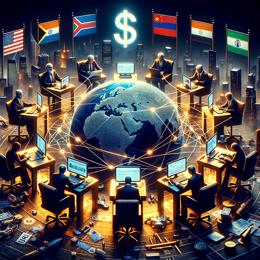
The Russian economy has undergone dramatic changes since the onset of the full-scale invasion of Ukraine. Facing an unprecedented battery of economic sanctions, Russia has witnessed the freezing of significant central bank assets, restricted access to global financial services, and exclusion from certain international markets. However, in a display of economic resilience, Russia's economy continues to grow, fueled largely by the war itself.
As reported by the International Monetary Fund (IMF), despite sanctions gnawing at the Russian GDP—which stands approximately 7% lower than the pre-war projection—the nation is expected to see a growth rate of 2.6% in 2023. This figure stands in stark contrast to the growth rates of other major economies such as the United Kingdom and the European Union, who anticipate figures of 0.6% and 0.9% respectively.
The Russian central bank's aggressive monetary policies, consisting of sharp interest rate hikes to curb inflation, combined with fiscal strategies to keep Russian capital circulating domestically, have prevented a collapse of the ruble. The vitality of the currency is a critical factor in maintaining internal economic stability.
Moreover, Russia appears to have adapted to the sanctions regime, with oil exports serving as a prime example; despite a theoretical cap on the sale price, Russia utilizes a "dark" fleet to continue trading, thus sustaining a flow of revenue into public coffers.
The war in Ukraine itself has become a catalyst for Russia's financial sustenance. With a hefty portion of the nation's budget allocated to military spending—close to 40% and exceeding 10% of its GDP—various defense-related expenditures contribute substantially to the economic growth figures. The conflict has reoriented the economy towards defense and has drastically increased government expenditure.
The situation, however, is precarious. Russia is caught in a conundrum where neither winning nor losing the conflict in Ukraine is economically viable. A victory would impose an insurmountable cost for rebuilding and maintaining Ukraine, while a defeat would leave Russia economically isolated. A stalemate appears to be the most tenable option for Russia's leadership to prevent a total economic collapse.
Furthermore, Russia’s lasting economic allegiance to natural resources and the resulting lack of diversification poses a considerable long-term risk. The reliance on this sector, particularly in times of war, could greatly inhibit Russia's ability to pivot to alternative economic models. Additionally, the labor shortage, compounded by wartime casualties and a brain drain, paints a bleaker picture for future economic restructuring.
Thirty-five years on from the dismantling of the Berlin Wall, a comparison with its former Soviet neighbors—Estonia, Latvia, Poland, and Hungary, who chose the path of European integration—highlights Russia’s lagging behind in economic prosperity. As it edges towards a longer and costlier conflict, the motivations for ending the war, economic or otherwise, dim in the face of an economy that has become entwined with its sustenance on the war.
Leave a Comment
Recent News