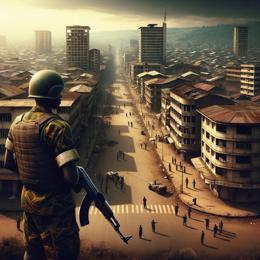
Image created by AI
Solemn Goodbyes: Thousands Mourn at Alexei Navalny's Funeral Amidst Police Presence
In the somber streets of Moscow, a multitude of mourners gathered on a gloomy Friday to bid their last respects to Alexei Navalny, a prominent Kremlin critic whose untimely demise has sent ripples of mourning and unrest throughout Russia and the international community. Navalny, who had been serving time in an Arctic penal colony, passed away two weeks prior under circumstances shrouded in mystery, as the authorities have yet to release a statement regarding the cause of his death.
The air of reverence outside the Church of the Icon of the Mother of God Soothe My Sorrows was palpable as the hearse arrived. Navalny's coffin, draped in solemnity, was met with a respectful applause from the crowd that had amassed despite the heavy police presence. Emotions then escalated to fervent chants of "Navalny! Navalny!"—a collective voice for the silenced opposition.
As the coffin made its way inside, hushed and somber tones underscored the reverence the crowd held for Navalny. In a potent display of affection and respect, the procession included his family, close friends, political allies, and countless Russians who respected and supported Navalny's anti-corruption efforts and commitment to democratic values.
Inside the church, a moment of intimacy was shared as the open casket allowed for a final goodbye; loved ones stroked and kissed Navalny, a gesture of closure for a life that impacted many across Russia and beyond its borders. Outside the church, tensions ran high as supporters who were barred from entering the premises chanted, “Let us in to say goodbye!”
Following the funeral service, a sea of people marched solemnly to the Borisovskoye Cemetery. The march was filled with emotion, but remained peaceful under the watchful eyes of a significant contingent of police officers who stood guard throughout the event.
The interment of Navalny was a blend of grief and defiance as the coffin was lowered into the ground, signifying the end of a controversial chapter in Russia's modern political history. Mourners, allies, and international observers shared a collective moment of contemplation, grappling with the implications of his death for the future of Russian dissent and democracy.
As the world watches and waits, the silence from Russian authorities regarding Navalny’s cause of death has been deafening. This lack of transparency fuels speculation and concern over the state of political freedom and human rights in Russia. Navalny's death marks the end of a chapter, but also serves as a poignant reminder of the struggles faced by those who dare to speak out against corruption and injustice in a society where such virtues are perilously at odds with the prevailing powers.