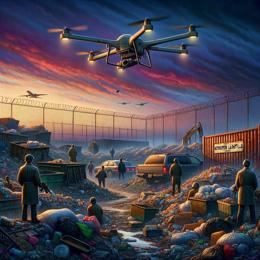
Image created by AI
Fear and Resilience: Sidon Caught Between Crises and Israeli Strikes
The seaside city of Sidon, steeped in history and the echoes of overlapping empires, finds itself yet again at the edge of confrontation. Israeli military actions around the city have escalated fears among its inhabitants, who are already grappling with a tangled web of crises that have steadily unraveled Lebanese society as a whole.
Sidon, historically renowned for its cultural patrimony and vibrant streets, is also a city marked by the scars of Lebanon's multilayered predicaments. Its economy, much like the rest of the country, has been choked by hyperinflation, bank restrictions, and the broader impacts of the global pandemic. The Beirut Port explosion in 2020 only compounded the economic despair that grips the nation.
Yet, for all its internal struggles, it is the external threat that looms largest nowadays. The recent Israeli airstrikes on the neighboring towns of Ghazieh and Jadra sparked not just concern but raw fear in the hearts of Sidon's residents. The strikes, reportedly targeting Hezbollah and Hamas elements, resonate through the narrow alleyways of Sidon’s Old Souk, where residents recall the shaking windows and closing shop shutters as reverberations of the conflict drew ominously close.
The strategic hits on Sidon's periphery serve as harrowing reminders to the city's inhabitants, who are no strangers to the specter of war. The town's proximity to active conflict zones leaves it vulnerable to becoming collateral in the broader Israeli-Hezbollah confrontations. Despite no direct strikes on Sidon thus far, residents like Marwan and Zainab Hamadeh feel the psychological weight of what feels like an inevitable encroachment.
Marwan's carpentry business stands testament not only to his resilience but to that of Sidon itself. Shops that once flourished alongside his have shuttered, victims of the country's unforgiving economic climate. The eeriness of the Old Souk is poignant, with fewer tourists venturing to explore landmarks like the Crusader Castle or the Debbane Palace, which attests to Sidon's historical significance and the intangible loss that diminished tourism brings.
Olfat Baba, custodian of Sidon’s legacy at the Debbane Palace, sees not just a museum but a repository of hope in tough times. Visitor numbers have plummeted, a direct hit to the lifeline of those custodians of culture. The shrinking footfall of tourists - curtailed by security incidents and the echoes of conflict - paints a stark portrait of a city and a nation in turmoil.
Perhaps most telling of Sidon’s stoic endurance is the approach of Ramadan, a time typically marked by communal celebrations and pious reflection. Yet, the current situation casts a shadow over the impending holy month, with festivities marred by financial insecurity and the haunting possibility of violence.
In the face of such uncertainties, Sidon stands resilient, its people emblematic of a broader Lebanese spirit that refuses to be extinguished. As Israeli airstrikes create a ring of instability around them, the residents hover between the fatigue of enduring economic despair and the perpetual fear of imminent threat. They weave hope into the fabric of their daily existence, a counterpoint to the discord that surrounds them.
#GOOGLE_AD
Leave a Comment
Recent News