Image created by AI
The Russian Resilience: Economic Growth Amidst War and the Limits of Public Tolerance
Two years into the conflict with Ukraine, Russia's economy is showcasing a form of resilience that has many experts analyzing the situation with a mix of surprise and concern. Despite a global outcry and severe sanctions imposed by Western powers, Russia not only weathered the economic storm but also posted a growth in Gross Domestic Product (GDP) of 3.6% in 2023 after a contraction of 1.2% in the previous year. The International Monetary Fund (IMF) anticipates this growth trajectory to continue, projecting a further increase of 2.6% in 2024.
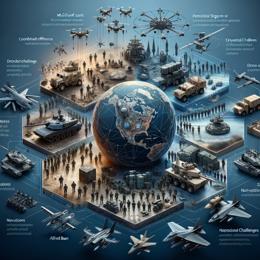
Driving this unexpected economic buoyancy is a dramatic increase in military and defense spending. Recent reports indicate that Moscow has allocated close to 40% of the national budget towards its defense sector. This financial commitment to the military has eclipsed social spending for the first time since the collapse of the Soviet Union, raising questions about the broader societal implications.
Economic historian and emeritus professor Mark Harrison from Warwick University reflected on the situation in a conversation with The Guardian, noting, "Putin doesn't know any more than we do where the tolerance of the Russian people lies." He emphasizes the unique challenge an authoritarian leader like Putin faces since he cannot easily gauge the public's true sentiments towards state policies — especially when those policies prioritize military expenditure over societal welfare.
The consequences of the prioritized war spending are diverse and significant. Alexandra Prokopenko, a former official at the Russian central bank and a researcher at Carnegie Russia Eurasia Center, warned in a Foreign Affairs piece about the shift towards a militarized economy, cautioning that it threatens social and developmental needs.
Moreover, Russia's ongoing war efforts have led to an alarming labor shortage and a phenomenon described by some as a 'brain drain', with many educated and skilled Russians leaving the country. An IMF official even drew parallels between the current Russian economy's reliance on military and state-heavy spending and that of the bygone Soviet era during a CNBC segment.
This economic outlook comes at a crucial political juncture as President Vladimir Putin is seeking another term in the upcoming March elections. With the prospect of a fifth presidential term for the 71-year-old leader against three contenders, there seems to be little doubt about the election's outcome.
However, beneath the surface of economic growth data and political certainty lies an underlying tension: the Russian people's response to the prolonged impact of the conflict on their lives and the state's allocation of resources. While the Russian economy may show resilience on paper, the endurance of the Russian spirit in the face of mounting military costs and a strained social fabric remains a question mark, one whose answer may emerge more in the streets than in spreadsheets.
Leave a Comment
Recent News