Image created by AI
Health Professionals in Western Cape Raise Concerns Over Funding Cuts and Their Impact on Public Healthcare
Health professionals from tertiary hospitals in the Western Cape have expressed grave concerns over the state of public healthcare following significant national budget reductions. The austerity measures imposed by the national government have had a notable impact on service delivery, compelling the provincial Department of Health and Wellness to limit the recruitment for vacant clinical roles and resort to other cost-saving actions.
Lydia Cairncross, as the head of the Department of Surgery at Groote Schuur Hospital, spoke out about the difficult decisions the hospital has faced, particularly the cut in elective surgical procedures. This has resulted in approximately 10 fewer operations per day, as two of the daily theatre lists have been discontinued. Cairncross highlighted the knock-on effects of rescheduling, underlining the longer waits for patients needing medical intervention.
The Groote Schuur Hospital staff had made significant strides in overcoming surgical delays since the Covid-19 disruptions, cutting down their backlog from 6,000 to 3,000-4,000 patients. But these recent budget constraints are threatening to reverse the gains made, especially when new patients add to the queue more quickly than the hospital can handle due to the reduced surgical capacity.
One of the major repercussions of the cutbacks is the increasing pressure on emergency services. Cairncross emphasized that deferred elective surgeries could escalate into emergency situations as patients' conditions deteriorate. This trend not only burdens the healthcare system but also demands more resources and complex care, ultimately impacting patient recovery outcomes.
The reductions in surgical slots also adversely affect oncology patients awaiting vital surgeries. According to Jeannette Parkes, head of the Division of Clinical and Radiation Oncology, timely surgeries are critical for precise diagnoses and staging of cancers, and the delays could prove detrimental.
Additionally, there is a significant shortfall of surgical staff across various specialties, which Cairncross notes is part of a broader trend affecting all departments within the region's tertiary hospitals. After the recent budget slashes, fears arose that the hospitals would struggle to meet payroll by mid-January 2024—a crisis that led to emergency de-escalations in hospital services and freezes on hiring for clinical and non-clinical positions.
Ntobeko Ntusi, head of Medicine at Groote Schuur Hospital, revealed an alarming gap of nearly 300 unfilled posts at both Groote Schuur and Red Cross hospitals. Short-lived permission was granted to fill a meager number of these vacancies in January and February, signifying a mere drop in the ocean in terms of the needs of these crucial institutions.
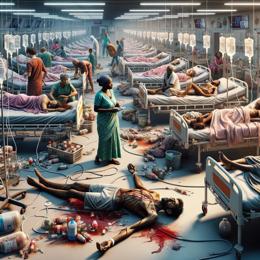
The personnel scarcity is acutely felt in emergency services and nursing, with Cairncross reporting a 15% nursing deficit creating strain on the wards. Staff shortages necessitate longer wait times for appointments and hinder access to care as beds become a scarce resource.
The dire staffing situation extends to the oncology sector where, according to Parkes, a shortage could soon cap the number of chemotherapy treatments available. She also pointed to the ripple effect as remaining staff face escalating workloads, leading to a cycle where more staff seek better conditions elsewhere, further exacerbating the vacancy issue.
A similar conundrum faces the Department of Anaesthesiology and Critical Care at Tygerberg Hospital, as chronicled by Sean Chetty. Tygerberg encounters a backlog in surgical departments compounded by the pandemic and exacerbated by the budget cuts. This engenders a harsh loop where less funding results in treating sicker patients that require more elaborate care.
Mental health concerns among healthcare workers have surged, with providers experiencing anxiety and depression due to job insecurity and career progression uncertainties. Ntusi also expressed disappointment in the lack of communication from governmental figures during this period, emphasizing a break in dialogue and shared planning.
An open letter with over 1,000 signatories, including heads of departments, senior clinicians, and nursing staff from the Western Cape, has urged provincial and national leaders to reconsider the budget cuts for the 2024/25 financial year. The letter details the profound implications of the allocation decimations on public health services.
The budgetary constraints are not solely the result of direct funding reductions. They are magnified by increases in personnel expenses arising from a wage settlement higher than anticipated, which was not factored into the original budgets. The Western Cape and other provinces received only partial funding to cover these unexpected costs, as disclosed by Western Cape Premier Alan Winde and Mireille Wenger, Minister of Finance and Economic Opportunities.
Furthermore, the national Medium-Term Budget Policy Statement of November 2023 signaled a continuation of austerity with future spending curtailments forecasted. This decision disproportionately affects crucial sectors such as health and education across the country. The Western Cape Department of Health and Wellness is undergoing consultative procedures to find ways to mitigate these impacts, emphasizing a commitment to quality care for the region's citizenship.
Response strategies to the budgetary pressures vary across provinces. For instance, Gauteng has not implemented a hiring freeze for its tertiary facilities, according to Motalatale Modiba, spokesperson for the Gauteng Department of Health. However, an internal memorandum indicated tightened control over the approval of commuted overtime, an expense that had previously led to budget overruns.
The Eastern Cape Department of Health too has faced its challenge, as revealed by Mkhululi Ndamase, though emphasis was placed on filling key posts while remaining within their budgetary confines. An internal circular highlighted issues around the hiring process and underscored the need for stricter controls and authorization for appointments.
These stringent measures, as suggested by the proactive stance of the Western Cape's government, might cause sharper immediate impacts compared to other provinces that may have delayed responses. Yet, the communication breakdown between the province’s health leadership and ground-level clinicians remains a concern.
Commentary from finance experts, like Professor Alex van den Heever from the Wits School of Governance, has criticized the provincial equitable share and conditional grants allocation processes as potentially being subject to manipulation and misalignment with actual service demands. Wenger underscored that the impacts of these national budget cuts are largely beyond provincial control, as allocations derive from national tax revenue disseminated by National Treasury.
Finally, in response to widespread concerns, Health Minister Dr. Joe Phaahla acknowledged the budget's limitations but greeted with accountability the additional funds designated for health in Finance Minister Enoch Godongwana’s 2024 Budget Speech. The allocation included funds for infrastructure, addressing wage increases, and staffing expansions, suggesting a ray of hope for the strained sector. Still, advocacy groups like the Treatment Action Campaign urged a deeper investment in health as essential for the nation's welfare.