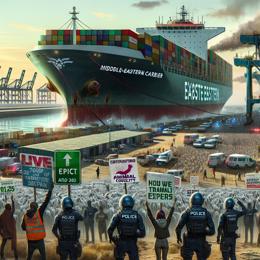
Image created by AI
Cape Town's Al Kuwait Incident Raises Concerns Over Distressed Livestock and Maritime Regulations
The port city of Cape Town, South Africa, has found itself at the center of a growing controversy over the treatment of livestock on board the Al Kuwait livestock carrier. The ship, which has been hauntingly labeled a "death ship" by animal rights activists, raised alarms after a photograph was leaked, depicting the horrific living conditions for the cattle aboard.
The Kuwaiti-flagged vessel initially made in an unscheduled stop in Cape Town for refueling and restocking supplies after leaving Brazil with 19,000 cattle. South African authorities faced immediate backlash for not confiscating the visibly distressed animals, instead opting to treat them aboard the vessel. This choice has left animal lovers and activists dismayed, as they recall an incident from the previous year in East London where the NSPCA took decisive action in a case of animal cruelty linked to the same Kuwaiti company, Al Mawashi.
The dire predicament of the Al Kuwait cargo arises from multiple issues. First is the ethical concern regarding the welfare of the animals, given their dismal living conditions and the evidence of deceased cattle among the distressing imagery. Further complicating the matter are the potential health risks associated with the introduction of foreign diseases—a legitimate concern for South African authorities, as highlighted by Jacques Peacock of the NSPCA. South Africa's strict adherence to the Animals Protection Act and international health protocols influenced their decision to refrain from importing the infected cattle.
Unsubstantiated allegations further muddy the waters, with rumors that some of the cattle—both dead and alive—were dumped into the ocean. These claims have not been verified, and Jacques Peacock has reiterated the necessity for proper carcass management aboard the ship, emphasizing adherence to Standard Operational Procedures in line with maritime regulations.
The South African Maritime Safety Authority (Samsa) has clear guidelines on carcass discharge at sea, detailing conditions that must be met to avoid environmental pollution under the International Convention for the Prevention of Pollution from Ships (Marpol). However, rumors of dumping livestock at sea raise grave concerns over adherence to these standards.
Collen Msibi from the Department of Transport shed light on the vessel's clearance for operational activities, which was granted swiftly despite the ongoing concerns. This has only intensified the scrutiny on the enforcement of maritime laws and the loopholes that may exist, allowing for the alleged mistreatment of animals during sea transport.
The Al Kuwait incident in Cape Town brings to the forefront the challenging balance between animal welfare, maritime trade regulations, and biosecurity risks. The incident demands a deeper inquiry into the international live export industry, spotlighting the need to reevaluate the ethical and legal frameworks governing the transportation of livestock across the globe.
Leave a Comment
Recent News