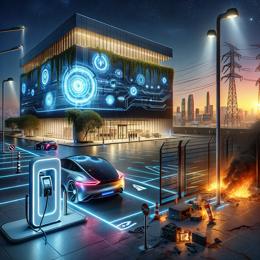
Image created by AI
South Africa to Introduce 150% Investment Rebate for Electric Vehicles in 2026
South Africa's move to embrace a greener, more sustainable future is gaining momentum as Finance Minister Enoch Godongwana announced a significant incentive for the motoring industry to invest in electric and hydrogen-powered vehicles (EVs). The introduction of a 150% rebate on qualifying investment expenditures starting in the 2026 financial year is a bold measure expected to steer the economy towards innovation and growth in the face of several challenges.
The rebate, which will allow manufacturers to claim one and a half times their investment amount in the first year, is estimated to have an impact of R500 million on government funds. As opposed to the existing Automotive Production Development Programme incentives, this rebate is set to further bolster production volumes by encouraging investment in cutting-edge vehicle technologies.
This move comes at a critical juncture as South Africa's economy seeks renewed growth paths, aiming for a projected average of 1.6% from 2024 to 2026. This expected growth rests on the hopes of reduced power cuts, lower inflation, and a stable electricity supply, alongside improved freight rail and port operations. Nevertheless, Finance Minister Godongwana has made it clear that addressing the sovereign credit risk and energy crisis is paramount for the country's economic advancement.
The much-anticipated Electric Vehicles White Paper has laid out a strategic electric vehicle roadmap, pivotal in shaping the future of the automotive industry in South Africa. By 2035, the industry is expected to transition to a dual platform of producing both internal combustion engine vehicles and EVs. This aligns with the global stance of key South African export markets like the UK and Europe, which plan to phase out ICE vehicle sales by 2035.
The electrification of the transport sector forms a vital part of South Africa's Just Energy Transition plan, intending to cultivate a low-carbon, climate resilient economy. This vision for sustainable growth is further supported by a reshuffle in funding, with the government reallocating R964 million for the transition to electric vehicles. Additionally, R600 million is assigned for global business incentives and a striking R16.4-billion for business incentives over the next years through the Department of Trade, Industry and Competition.
To underscore the importance of reducing carbon emissions, the government has also raised the carbon tax and implemented an increase in the carbon fuel levy. As the conversation on green reforms continues, further discussions and public commentary on the second phase of the carbon tax will unfold later in the year.
The move towards NEVs had been anticipated, with Naamsa CEO Mikel Mabasa expressing relief over the government's intentions to support the automotive sector's transition to a greener economy. Such policy reforms are vital for South Africa to elevate its stance in the global automotive market and transition to NEVs, fostering domestic market demand, establishing renewable energy-based charging infrastructure, and promoting production.
As South Africa gears up for this pivotal change, the groundwork laid by the 2026 investment rebate could be a game-changer for the country's motoring sector and economic stability. It marks a significant step towards achieving both environmental sustainability and industrial transformation, helping to maintain South Africa's competitive edge in the global market.
Leave a Comment
Recent News