Image created by AI
The Cost of Independence: Going Off-Grid with Solar Power in South Africa
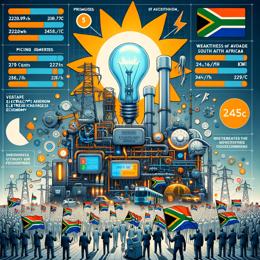
The continuity of electrical supply has been a long-standing issue in South Africa, with load-shedding and unreliable grid performance being at the forefront of homeowner frustrations. As Eskom's energy availability factor (EAF) plummets, individuals across the nation are contemplating a seemingly radical yet increasingly necessary decision: to kiss Eskom goodbye and embrace the autonomy of off-grid solar power systems. But just how much would such a leap cost?
The stark reality is that a transition to a completely independent solar power system is not just a switch, but rather a substantial financial undertaking. According to recent estimates, homeowners could expect to spend anywhere upwards of R500,000, varying widely based on their monthly electricity consumption.
Analyses by MyBroadband, utilizing tools like SolarAdvice’s solar power system calculator, provide a clearer picture for South Africans considering this investment. For homes using 600kWh, 900kWh, and 1,200kWh per month, it was found that initial costs for suitable solar systems would be around R139,000, R198,000, and R258,000, respectively. These amounts, however, only take into account grid-tied systems that require a minimal grid connection to ensure uninterrupted power supply.
Those intent on fully cutting ties with Eskom must prepare to supersize their systems to mitigate against periods of diminished sunlight, as advised by AWPower's managing director Christiaan Hattingh. Consequently, owners of these amplified off-grid systems might see their costs soar to roughly R350,000 for a 600kWh monthly system, and even to R520,000 or R670,000 for the higher tiers.
In a bid to balance the costs and remain somewhat eco-friendly, some homeowners may explore hybrid solutions, incorporating generators as backups to their solar installations. These systems would significantly trim the initial solar investment but introduce ongoing fuel expenditures—a factor becoming increasingly burdensome with fluctuating fuel prices.
Despite the financial hurdles, the shift towards solar energy exhibits significant potential for reducing grid reliance. Estimates indicate that solar systems of the aforementioned capacities could achieve self-sufficiency levels between 88% and 92%, a substantial offset to the uncertainties brought upon by Eskom's service delivery.
For those unable or unwilling to fully invest in hefty solar systems or to bring in backup generators, a more modest approach may be to install a smaller solar array, maintaining limited dependency on the grid for those cloud-overhung days. This strategy presents a middle ground for South Africans, where they can still benefit from the security of a renewable energy source while not completely severing their link to the national grid, or their wallets.
Ultimately, the decision to forego Eskom lies in a complex balance of financial capability, environmental consideration, and the desire for energy independence. As South Africans contemplate their electrical futures, the costs outlined serve as a guiding framework for what it might take to truly say goodbye to Eskom and hello to the sun.
Leave a Comment
Recent News