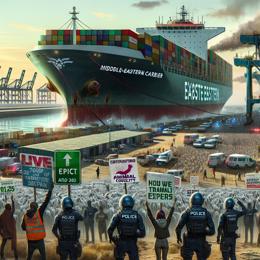
Image created by AI
SPCA’s Intervention on 'Al Kuwait': A Dire Call for Animal Welfare
The harrowing plight of 19,000 cattle aboard the 'Al Kuwait' vessel has prompted urgent action from the Cape of Good Hope SPCA, spotlighting the cruel reality of live animal exports. The ship's journey that began in Brazil and its temporary berth at Cape Town Harbour has become a focal point for animal welfare advocates worldwide. The SPCA's chilling exposé of the livestock's ordeal during their protracted sea voyage has cast a shadow of horror over the global shipping industry and has drawn the attention of both social media users and local government officials.
A court order was crucial for the SPCA to gain access to the ship, revealing conditions of severe neglect. The animals were discovered in a deplorable state, enduring extreme congestion, rampant disease, and distress. The presence of Sea Border South African Police Service (SAPS) personnel was mandated when initial efforts to inspect the ship were obstructed. This confrontation serves to highlight the resistance faced by organizations fighting for the welfare of animals in commercial transport.
The SPCA's ongoing inspection, determined to safeguard the cattle's well-being, coincides with the loading of necessary feed — a meager remedy for the damage already done. The NSPCA, alongside the Cape of Good Hope SPCA, has voiced a strong condemnation of maritime animal transport, with High Court battles dating back to 2019 reflecting their steadfast advocacy. The engagement of NSPCA Veterinary Consultant Dr. Bryce Marock in the vessel's inspection underscores the gravitas of the situation.
Underpinning the urgency of intervention is the foul odor of ammonia and waste that has spilled into Cape Town, alerting residents to the severity of the onboard conditions even before official reports surfaced. Social media users have expressed deep concern for the animals, prompting broader awareness and demands for change. Dr. Zahid Badroodien, the City's Mayco member for water and sanitation, confirmed the source of the pervasive stench as linked directly to the 'Al Kuwait', amplifying calls for immediate action.
This incident lays bare the systemic issues within the live export trade, where profit often eclipses the humane treatment of animals. The SPCA has indicated a readiness to prosecute should evidence continue to point towards the mistreatment of the cattle, setting the stage for potential legal ramifications. International regulations and standards regarding animal transport are now facing intensified scrutiny. Furthermore, the case of the 'Al Kuwait' will likely influence upcoming policies and possibly instigate reform in an industry that has long operated with inadequate accountability.
As the SPCA continues its vigilant monitoring of the cattle's welfare, a collective call to end such perilous journeys is reverberating across the globe. The 'Al Kuwait' may just become a catalyst for a paradigm shift in how societies value and protect the lives of animals en route to overseas markets.
Leave a Comment
Recent News