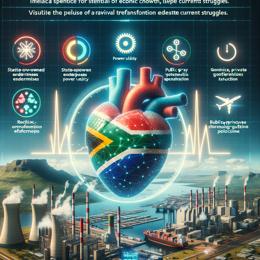
Image created by AI
South Africa's Fiscal Quagmire: Ballooning Debts and a Static Economy Ahead of 2024 Elections
South Africa's financial landscape is marred by hurdles as the Minister of Finance, Enoch Godongwana, grapples with a sluggish economic growth rate, an expanding public wage bill, and the quagmire of boosting revenue collections in the shadow of forthcoming elections. The nation's economic pulse is projected to hover between a modest 1.0% and 1.5% growth rate for 2024, barely on par with population growth and insufficient to fortify the tax base or significantly stave off debt-to-GDP ratio spikes.
Debt is a crucial economic indicator, and with growth limping, the debt burden swells. South Africa teeters on the brink with a debt-to-GDP ratio forecast to hit 74.7%, and with government expenditures outrunning revenues, a marked fall in debt percentage appears implausible. It's a vicious cycle wherein low growth constrains the tax base, further straitening government borrowing ability.
Beyond macroeconomic indicators, this dilemma trickles down to heightened expenditure pressures. Public sector remuneration, amounting to a substantial 30% of the R2.26-trillion budget, places strain on fiscal allocations. Furthermore, after revoking an initial wage cap and approving a 7.5% hike, the looming election cycle may compel further wage concessions, amidst international critiques of South Africa's disproportionately high public sector wage bill.
The pressure extends to state-owned enterprises (SOEs), with their financial sustainability in question and ponderous debts casting long shadows over the national budget. The State of the Nation Address by President Cyril Ramaphosa touched upon such SOE concerns and the National Health Insurance (NHI) Bill, which, while conceptually beneficial, demands monetary resources not readily identified in the nation's fiscal blueprints.
On the contentious subject of taxation, the minister warned of the necessity to extract an additional R15-billion. Options being contemplated include a general fuel levy and adherence to global tax regimes, including the 15% minimum corporate tax rate recommended by the OECD. Economists warn that increased taxation could stifle cyclical growth, and in an election year, the political gamble of raising taxes could be detrimental.
While the relief granted by the Social Relief of Distress fund underscores a commitment to social welfare, the R44-billion price tag raises sustainability concerns. As elections loom, critical conversations on tax reform, public expenditure, and welfare support sketch a nuanced vista of potential fiscal reform or continued economic inertia.
Leave a Comment
Recent News